The Left Brain vs. Right Brain Personality Test Was Pop Psychology's Biggest Con
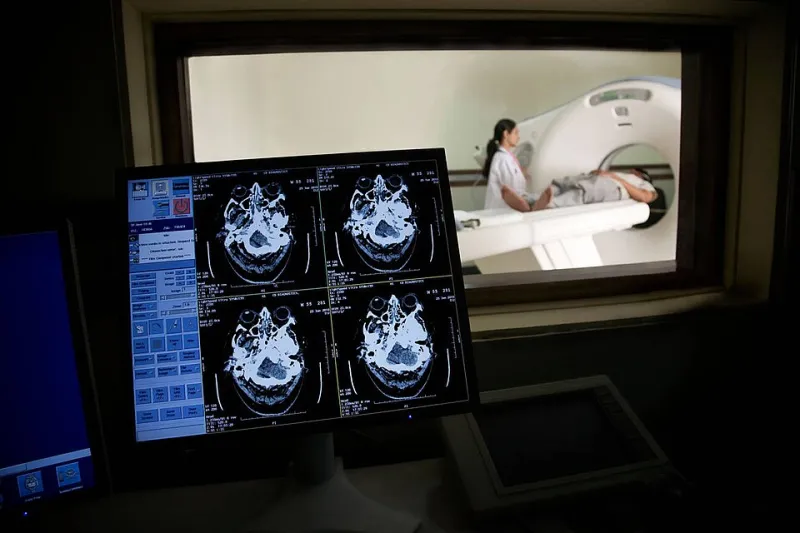
Photo: Goleisureintl, CC BY 4.0, via Wikimedia Commons
Ask someone whether they're a left-brain or right-brain thinker, and most people will give you a confident answer. Artists and musicians claim the right side. Accountants and engineers claim the left. Career counselors have built entire frameworks around it. Schools in the 1980s and 1990s redesigned curricula to 'reach right-brained learners.' Self-help books told you to unlock your creative right brain or sharpen your logical left.
There's just one problem: neuroscience never said any of that.
The left-brain/right-brain personality divide is one of the most successful myths in the history of popular psychology — a real scientific discovery that got twisted, oversimplified, and eventually turned into a personality typing system that the original researchers would barely recognize.
The Legitimate Science It Came From
The story starts with genuinely fascinating research. In the 1960s, neurosurgeon Joseph Bogen and psychologist Roger Sperry conducted studies on patients who had undergone a procedure called corpus callosotomy — a surgery that severed the corpus callosum, the thick bundle of fibers connecting the brain's two hemispheres, as a treatment for severe epilepsy.
With the two hemispheres unable to communicate directly, these 'split-brain' patients revealed something remarkable: the two sides of the brain did process certain things differently. The left hemisphere, in most people, was more involved in language processing. The right hemisphere seemed to handle certain spatial tasks. Sperry won the Nobel Prize in Physiology or Medicine in 1981 for this work. It was real, it was significant, and it was carefully described.
What it was not was a personality typology. Sperry's split-brain patients were a very specific population — people who had undergone unusual surgery. Their results described functional specialization under extreme conditions, not a blueprint for dividing the human population into two cognitive tribes.
How the Myth Got Built
The transformation from 'hemispheres have some specialized functions' to 'you are either a left-brain or right-brain person' happened fast, and a lot of it happened in print.
In 1979, a book called Drawing on the Right Side of the Brain by Betty Edwards became a massive bestseller. Edwards was an art educator, and her book — genuinely useful for teaching drawing — leaned heavily on the hemisphere-specialization idea. She framed the right brain as the seat of visual creativity and intuition, and the left brain as the home of verbal, analytical thinking. The book was well-intentioned, but it popularized a dramatically simplified version of Sperry's work.
From there, the idea spread through self-help culture like wildfire. By the 1980s, corporate training seminars were sorting employees by brain dominance. By the 1990s, the framework was embedded in educational theory. By the 2000s, online quizzes were telling millions of people which hemisphere 'ran' their personality.
Neuroscientists watched this happen with increasing frustration.
What the Brain Actually Does
Here's what modern neuroimaging consistently shows: almost every cognitive task you perform — reading, problem-solving, creating, calculating, imagining — activates both hemispheres simultaneously. The idea that creativity lives in one hemisphere and logic lives in the other has no support in contemporary brain science.
A landmark 2013 study from the University of Utah analyzed brain scans from over 1,000 participants and found no evidence that individuals preferentially use one hemisphere over the other. There was no such thing as a 'left-brained person' or a 'right-brained person' in the data. Both hemispheres were consistently engaged across participants, regardless of the task.
And here's where it gets particularly interesting: if anything, the creative process as neuroscientists study it tends to involve more left-hemisphere activity than popular culture would suggest. Language, pattern recognition, and the kind of associative thinking that underlies a lot of creative work are heavily left-lateralized in most people. The right hemisphere, meanwhile, is deeply involved in things like recognizing faces, reading emotional tone, and processing spatial relationships — not exactly the 'free-spirited artist' portfolio pop psychology assigned to it.
The real picture isn't left versus right. It's an incredibly dense, constantly shifting network of regions across both hemispheres working in coordination.
Why the Myth Won't Quit
The left-brain/right-brain framework is sticky for a few reasons, and they're worth understanding.
First, it gives people a flattering identity. Calling yourself a right-brained creative implies a certain kind of soul. Identifying as left-brained signals rigorous, systematic thinking. Both feel like compliments. Frameworks that let people feel good about themselves tend to persist.
Second, it offers an explanation for struggle. If you're bad at math, it's because you're right-brained. If you can't draw, it's because you're too left-brained. It converts deficits into identity, which is psychologically comforting even when it's scientifically useless.
Third, it arrived with the credibility of a Nobel Prize attached to it — even though the prize was for something much more specific and careful than the pop-psych version that followed.
The Takeaway
The real story of the left brain/right brain myth is a case study in how legitimate science gets processed by popular culture. The original research was solid. The interpretation that followed was not. Somewhere between a Nobel lecture and a personality quiz, a nuanced finding about split-brain surgery patients became a universal theory of human personality.
Your brain isn't divided into a creative half and a logical half. It's a single, massively interconnected organ that uses both hemispheres for virtually everything you do. The next time someone asks whether you're left-brained or right-brained, the most accurate answer is: yes.