Neuroscientists Are Tired of Explaining This: Both Sides of Your Brain Are On the Whole Time
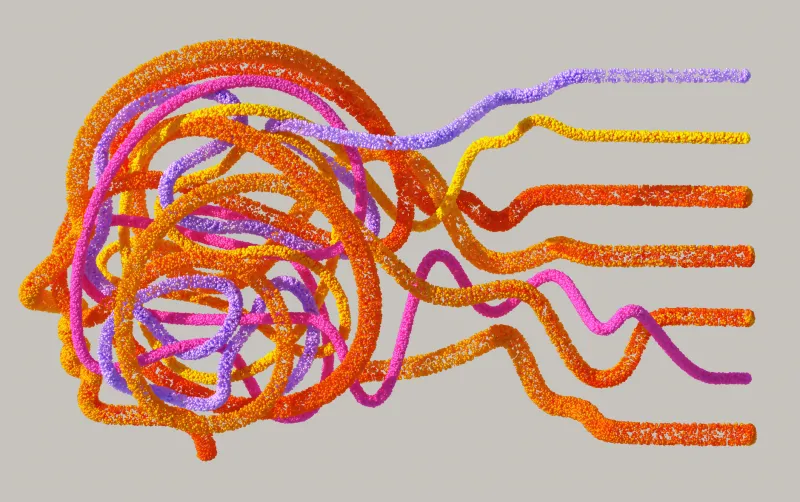
Productivity culture loves a clean framework. And few frameworks have proven as durable — or as scientifically shaky — as the idea that your brain operates in hemispheric modes. You're either in your analytical left brain or your creative right brain. You're either locked in logical thinking or flowing with intuition. Focus hard enough on a problem and you're running one side of your brain; let your mind wander and the other side takes over.
It's a tidy story. It also doesn't describe how your brain works.
Neuroscientists have been pushing back on this for years, but the myth keeps finding new audiences — in self-help books, in corporate training programs, in apps that promise to help you "activate" the hemisphere you've been neglecting. The persistence of the idea says something interesting about how a real scientific discovery can get stretched far beyond what the evidence actually supports.
Where the Story Came From
The hemispheric dominance concept didn't come from nowhere. It has a legitimate scientific origin — it just got dramatically oversimplified on the way to the public.
In the 1960s, neurosurgeon Joseph Bogen and researcher Roger Sperry worked with a small group of patients who had undergone a procedure called a corpus callosotomy. In these individuals, the thick bundle of nerve fibers connecting the two brain hemispheres — the corpus callosum — had been surgically cut, usually as a last resort to treat severe epilepsy. These were the famous "split-brain" patients.
Sperry's experiments with these patients revealed something genuinely remarkable: when the two hemispheres couldn't communicate, they behaved in distinct ways. The left hemisphere tended to handle language and sequential reasoning. The right hemisphere excelled at spatial tasks and pattern recognition. Sperry won the Nobel Prize in 1981 for this work, and the research was legitimately groundbreaking.
But here's the critical detail that got lost in translation: these findings came from people whose brain hemispheres had been surgically disconnected. They described what each hemisphere could do in isolation — not how a healthy, connected brain operates during normal life.
That distinction didn't survive the journey into popular culture.
What Brain Imaging Actually Shows
Modern neuroimaging — particularly functional MRI, which tracks blood flow as a proxy for neural activity — has made it possible to watch the brain work in real time. And what researchers see, consistently, is bilateral activity. Both hemispheres are engaged across virtually every cognitive task.
When you're reading, both hemispheres are active. When you're solving a math problem, both hemispheres are active. When you're listening to music, drawing a picture, or having a conversation, both hemispheres are active — simultaneously, in a continuous and highly coordinated exchange.
A 2013 study from the University of Utah directly tested the "dominant hemisphere" hypothesis by analyzing resting-state brain scans from over 1,000 people. The researchers looked specifically for evidence that individuals consistently favored one hemisphere over the other. They didn't find it. There was no measurable pattern of people being "left-brained" or "right-brained" in terms of overall network usage.
The lead researcher, Jeff Anderson, put it plainly: brain lateralization is real on a neurological level — certain specific functions do show some degree of hemispheric preference — but that has nothing to do with personality types or cognitive styles, and it certainly doesn't mean one hemisphere is "on" while the other waits.
The Myth That Productivity Culture Built on Top of It
Even setting aside the left-brain/right-brain personality myth, there's a related and equally unfounded idea that has carved out its own niche in self-help and productivity spaces: the notion that focused work and creative thinking require "switching" between hemispheres, and that you can train yourself to access each mode on demand.
This framing shows up in books about unlocking creativity, in workplace training programs that classify employees as analytical or intuitive thinkers, and in meditation apps that promise to help you "balance" your hemispheres. It's a compelling narrative because it gives people a mental model for the very real experience of shifting between focused and diffuse thinking.
The experience is real. The neurological explanation is fiction.
What's actually happening when you shift from deep focus to open-ended thinking has more to do with different brain networks — particularly the interplay between the default mode network and the executive control network — than with hemispheric switching. And both of those networks span both sides of the brain.
Why the Myth Keeps Winning
There's something almost unfair about how persistent this idea is, given how clearly the evidence cuts against it. Part of the explanation is that lateralization is real in specific, narrow ways — language processing does lean left in most people, for instance — and that grain of truth gives the broader myth a place to hide.
But mostly, the myth survives because it's useful. It gives people permission to identify as a "creative type" or an "analytical type." It provides a framework for explaining why some things feel easy and others feel hard. It offers a flattering story about untapped potential — your neglected right brain, just waiting to be activated.
Neuroscience doesn't offer anything quite that tidy. The real story is a brain that works as a massively interconnected whole, with both hemispheres in constant conversation, doing something far more complex and collaborative than any left-right toggle could capture.
The Takeaway
Your brain isn't a light switch with two settings. It's more like an orchestra — both sides playing at once, all the time, each contributing to something neither could produce alone. The split-brain research that started this whole conversation was real science. The leap from "surgically disconnected hemispheres behave differently" to "your personality is determined by which hemisphere dominates" was not. The gap between those two ideas is where a useful myth was born — and where it should probably stay.