Counting to 20 While Washing Your Hands? That Number Came From Nowhere in Particular
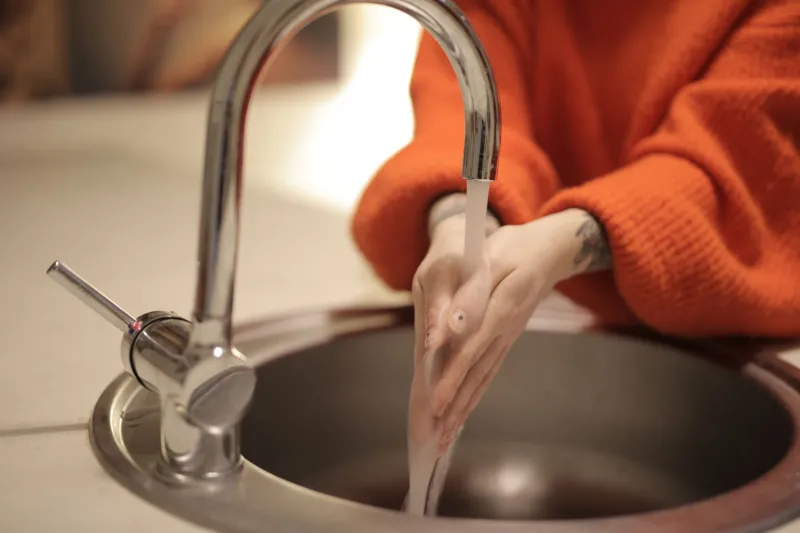
At some point in your life, someone told you to sing "Happy Birthday" twice while washing your hands. That little trick times out to roughly 20 seconds, which is exactly what the CDC recommends. It's printed on posters in every public restroom, drilled into kids in elementary school, and repeated by doctors like it's carved in stone somewhere.
But here's the thing nobody mentions: the 20-second figure was never rigorously compared against 15 seconds, or 25 seconds, or any other specific duration in a controlled clinical setting. It wasn't the product of a landmark study. It was, more or less, a reasonable estimate that became official guidance — and then became gospel.
Where Did 20 Seconds Actually Come From?
Public health guidelines don't always emerge from tightly controlled experiments. Sometimes they come from expert consensus, field observations, and practical reasoning — which isn't inherently bad, but it's very different from saying "we tested 10 seconds versus 20 seconds versus 30 seconds and 20 won."
The CDC's handwashing recommendations have evolved over decades, and the 20-second figure largely reflects a judgment call about what constitutes "thorough" washing based on how long it takes to mechanically work soap across the surfaces of both hands. It's a proxy for completeness, not a precisely calibrated threshold.
Some researchers have tried to study handwashing duration more directly. A 2011 study published in the journal Epidemiology & Infection found that washing for 15 to 30 seconds was more effective than shorter durations at reducing bacterial counts — but it didn't pinpoint 20 seconds as a magic cutoff. A 2019 study from Rutgers University found that just 10 seconds of washing with soap removed a significant amount of bacteria. The honest reading of the evidence is that more time generally helps, but the hard line at 20 seconds is more guideline than gospel.
 Photo: Rutgers University, via www.business.rutgers.edu
The Part That Actually Matters More Than the Clock
Here's where it gets interesting. Multiple studies suggest that technique matters substantially more than duration. Specifically:
- Soap is doing most of the work. Soap molecules are designed to surround and lift pathogens away from your skin. The mechanical friction of rubbing helps, but without soap, even a long rinse does relatively little against viruses and bacteria.
- Coverage is critical. Most people miss the backs of their hands, between their fingers, and around their thumbs. Studies using UV-visible lotion as a stand-in for contamination show that those spots consistently get skipped.
- Rinsing matters too. The goal is to wash pathogens off your hands and down the drain. Rinsing insufficiently means some of what you loosened just redistributes.
So if you're counting to 20 while barely lathering and skipping your fingertips, you're following the rule while missing the point.
Why the Myth Sticks Around
Simple numbers are easy to communicate and easy to follow. "Wash your hands thoroughly" is vague. "Wash for 20 seconds" is actionable. Public health messaging lives and dies by clarity, and a specific number — even an approximate one — is far easier to spread than a nuanced explanation of soap chemistry.
There's also an element of institutional inertia. Once a guideline becomes embedded in official recommendations, it tends to get repeated without revisiting the original reasoning. The CDC says 20 seconds, so schools say 20 seconds, so parents say 20 seconds, and the figure takes on an authority it never quite earned through direct testing.
The COVID-19 pandemic supercharged all of this. Suddenly handwashing was front-page news, and the 20-second rule got more airtime than it ever had before. That kind of cultural saturation makes a guideline feel like established science even when it's really just established habit.
What You Should Actually Do
None of this means you should stop washing your hands. Handwashing genuinely works, and it's one of the most effective personal hygiene habits you can have. The research on that is solid.
What it means is that fixating on the clock might be the wrong instinct. Instead:
- Use soap. Always. Water alone is dramatically less effective.
- Cover all surfaces. Backs of hands, between fingers, under nails, around the thumbs.
- Rinse well. Let the water carry pathogens away rather than just redistributing them.
- Don't rush the lather. Give the soap a moment to do its chemical work before you rinse.
If you do all that and it takes you 15 seconds, you're probably fine. If it takes 25, also fine. The "Happy Birthday" trick isn't wrong — it just happened to become the whole story when it was really just a rough guide to pacing.
The Takeaway
The 20-second rule is a reasonable heuristic, not a scientifically precise threshold. It persists because simple rules spread easily and official guidelines carry weight once established. The real science on handwashing points to soap, coverage, and rinsing as the variables that move the needle. Time matters, but it's the quality of those seconds — not the count — that actually determines whether your hands are clean.