Your Blood Has Never Been Blue — Even When It's Running Through Your Veins Right Now
Your Blood Has Never Been Blue — Even When It's Running Through Your Veins Right Now
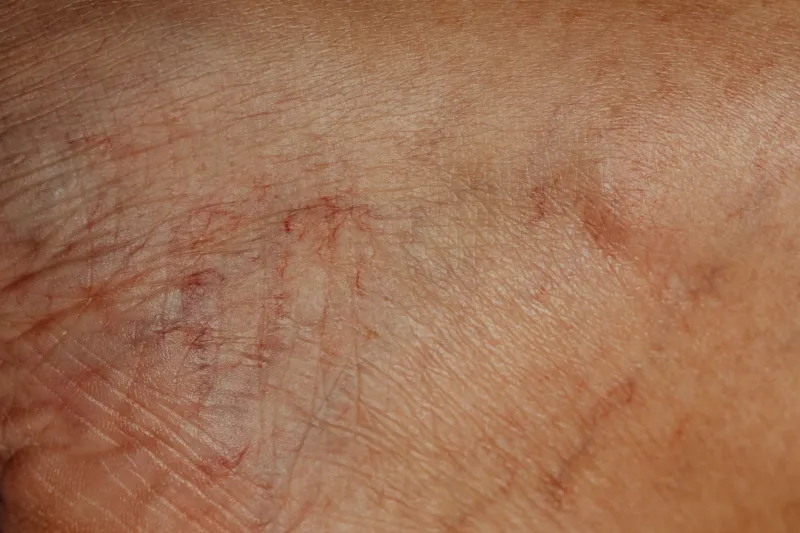
Look at the inside of your wrist right now. Those veins running just below the surface look distinctly blue or blue-green. It seems like pretty direct evidence — the blood in there must be blue, right? That's exactly what a lot of us were told in school, and the visible color of our own veins made it feel obviously true.
Except blood is never blue. Not when it's carrying oxygen, not when it's returning without it, not at any point in the circulatory cycle. Human blood is always some shade of red. The color you're seeing through your skin is a trick of light — and it's a genuinely interesting one.
The Two-Color Story Textbooks Told
The standard classroom explanation went something like this: oxygenated blood is bright red because oxygen binds to hemoglobin and gives it that vivid color. When blood delivers its oxygen to cells and returns through the veins, it becomes deoxygenated — and turns blue. The diagrams made it look clean and logical, with red arteries on one side and blue veins on the other.
This framing wasn't entirely invented. Medical diagrams do use red and blue to distinguish arterial and venous blood — it's a useful visual shorthand for understanding circulation. The problem is that somewhere between "this is a diagram convention" and "this is what your blood actually looks like," the distinction got dropped. For millions of students, the diagram became the fact.
What Blood Actually Looks Like
Hemoglobin, the protein in red blood cells that carries oxygen, changes color depending on how much oxygen it's holding. Oxygenated hemoglobin is a bright, vivid red — the kind you see when blood is drawn from an artery. Deoxygenated hemoglobin is a darker, deeper red, sometimes described as maroon or burgundy.
If you've ever donated blood or had a blood draw from a vein, you may have noticed the blood looks darker than you expected. That's deoxygenated blood — still red, just a richer, less bright version of it.
Blue never enters the picture. Not under normal physiological conditions, not in any human with standard hemoglobin. The molecule doesn't work that way.
So Why Do Veins Look Blue?
This is where the actual science gets interesting. The blue appearance of veins isn't coming from the blood — it's coming from the way light interacts with your skin.
Light contains multiple wavelengths, and different wavelengths penetrate tissue to different depths. Red and near-infrared light penetrate relatively deeply — they can pass through several millimeters of skin and underlying tissue. Blue and violet light, which have shorter wavelengths, are absorbed and scattered much closer to the surface.
When light hits your skin, the red wavelengths travel deeper and get absorbed by the hemoglobin in your blood — both oxygenated and deoxygenated. The blue wavelengths scatter back toward the surface before reaching the veins. This differential absorption creates a visual effect: the area around a vein ends up reflecting more blue light back to your eye than the surrounding tissue does, making the vein appear blue even though the blood inside it is dark red.
The depth of the vein, your skin tone, and the thickness of the tissue above it all affect exactly how blue the vein appears. People with lighter skin tend to see more pronounced blue-green coloring; in people with darker skin, the same veins may appear less distinctly colored or not visible at all. Same optical physics, different visual result depending on the canvas.
Why the Myth Persists in Classrooms
The blue-blood story is one of those myths that benefits from appearing self-evident. You can look at your own wrist and "see" the evidence. That immediate visual confirmation makes the explanation feel airtight, so few people think to question it.
The diagram convention also bears real responsibility here. Medical illustrations have used red and blue to represent arterial and venous blood for practical reasons — it makes complex circulatory diagrams readable at a glance. But when those diagrams show up in elementary school science textbooks without adequate explanation of what the colors represent, students reasonably conclude that blue is a literal description of venous blood.
Some textbooks have quietly corrected this over the years, but the explanation doesn't always make it into classroom instruction. Teachers repeat what they were taught, students absorb it as settled fact, and the cycle continues.
A Few Creatures That Actually Do Have Blue Blood
For what it's worth, blue blood does exist — just not in humans. Horseshoe crabs, octopuses, and some other invertebrates use a copper-based protein called hemocyanin to transport oxygen instead of iron-based hemoglobin. Hemocyanin turns blue when oxygenated, which is why horseshoe crab blood — famously harvested for use in pharmaceutical testing — is a distinctive pale blue.
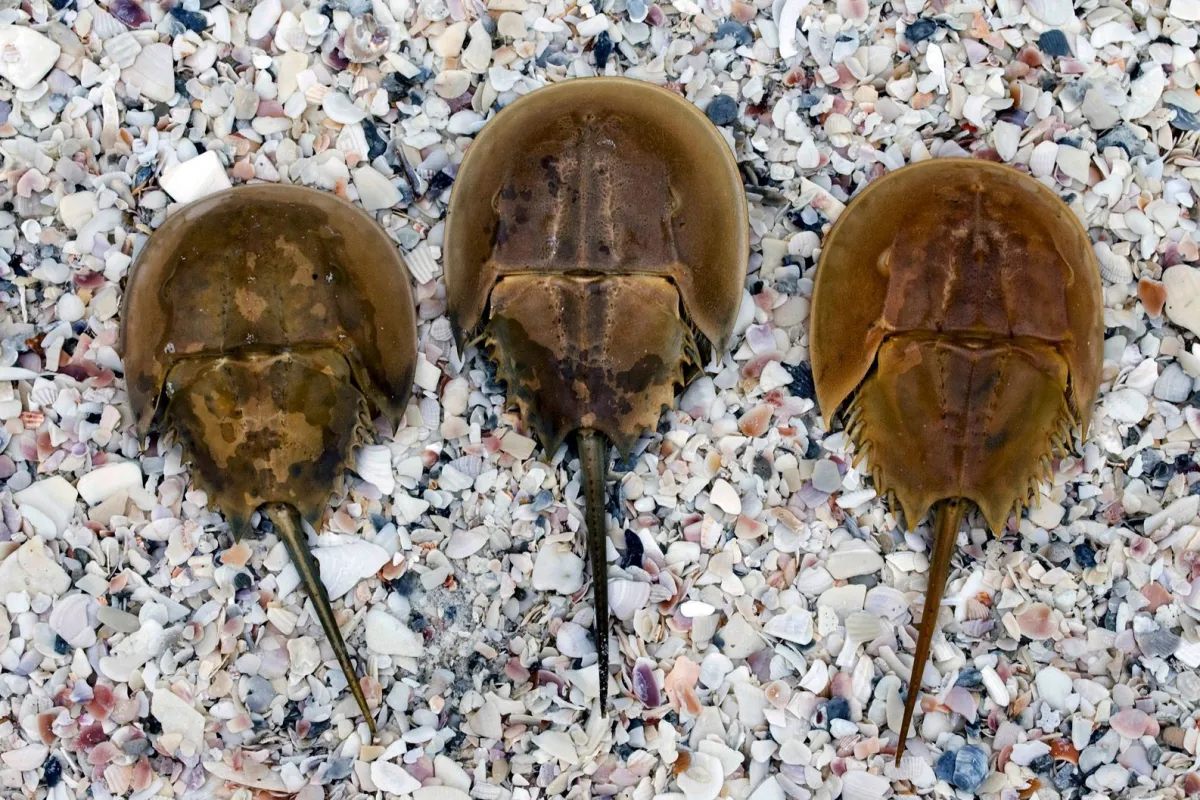 Photo: Horseshoe crabs, via img.delicious.com.au
So the concept isn't biologically impossible. It just doesn't apply to any vertebrate, and certainly not to you.
The Takeaway
Human blood is always red — bright red when oxygen-rich, dark red when returning through the veins. The blue color you see through your skin is a light-scattering phenomenon, not a window into what's actually inside the vessel. The myth took hold because medical diagrams use blue as a visual convention, and because veins genuinely do look blue from the outside — just for reasons that have nothing to do with the color of the blood inside them.