Grief, Joy, Empathy — Scientists Are Finding These Aren't as Human as We Thought
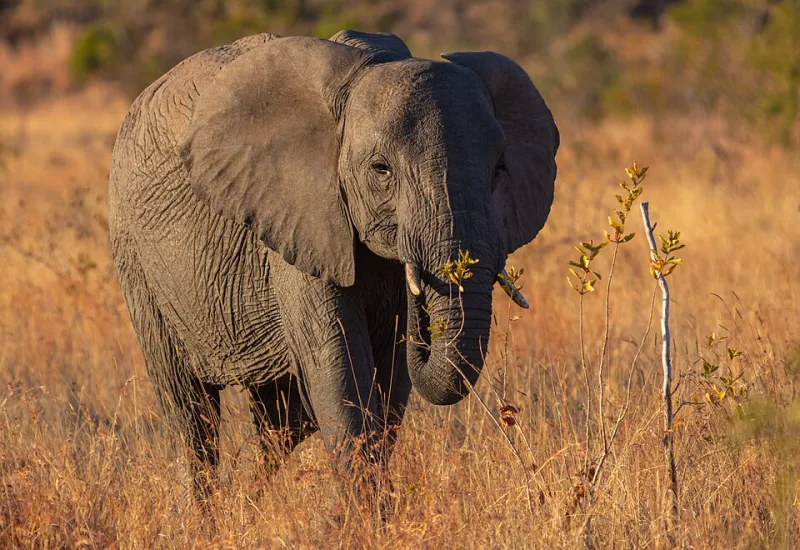
Photo: Diego Delso, CC BY-SA 4.0, via Wikimedia Commons
Grief, Joy, Empathy — Scientists Are Finding These Aren't as Human as We Thought
For a long time, the story went something like this: humans feel things deeply, and animals respond to stimuli. Emotions were our territory. Everything else was instinct, reflex, or at best a pale imitation of the real thing. It was a reassuring story — and it turns out to have been pretty significantly wrong.
Over the past two decades, a quieter revolution has been building in animal cognition research. It hasn't made as many headlines as it deserves, partly because the findings are inconvenient, and partly because accepting them requires rethinking a lot of things we've built around the assumption of human emotional uniqueness.
Where the "Humans Are Special" Story Came From
The philosophical foundation goes back a long way. René Descartes, the seventeenth-century French philosopher, famously argued that animals were essentially biological machines — complex, yes, but incapable of genuine thought or feeling. They didn't suffer in any meaningful sense; they just responded. This framework, called Cartesian mechanism, gave intellectual cover to centuries of scientific and agricultural practices that treated animal pain as a non-issue.
 Photo: René Descartes, via cdn.britannica.com
Darwin pushed back against this view considerably — he believed emotional continuity between humans and other animals was a natural consequence of shared evolutionary history — but his perspective lost ground as the twentieth century's behaviorist movement took hold. Behaviorism, which dominated psychology for much of the 1900s, focused strictly on observable actions and treated internal mental states as scientifically untestable and therefore irrelevant. You couldn't measure grief, so grief wasn't a useful concept. Not in a lab rat, and arguably not even in a person.
That framework has been unraveling steadily, but its cultural legacy is stubborn.
What the Research Is Actually Showing
Elephants may be the most well-documented case. Field researchers have observed elephants returning to the bones of deceased herd members, touching the remains with their trunks, standing quietly in what looks unmistakably like mourning. Joyce Poole, a wildlife researcher who has studied African elephants for decades, has described behaviors around death that include vocalizations, prolonged attention to the body, and what she calls a kind of grief that doesn't resolve quickly. Elephant mothers have been observed carrying dead calves for days.
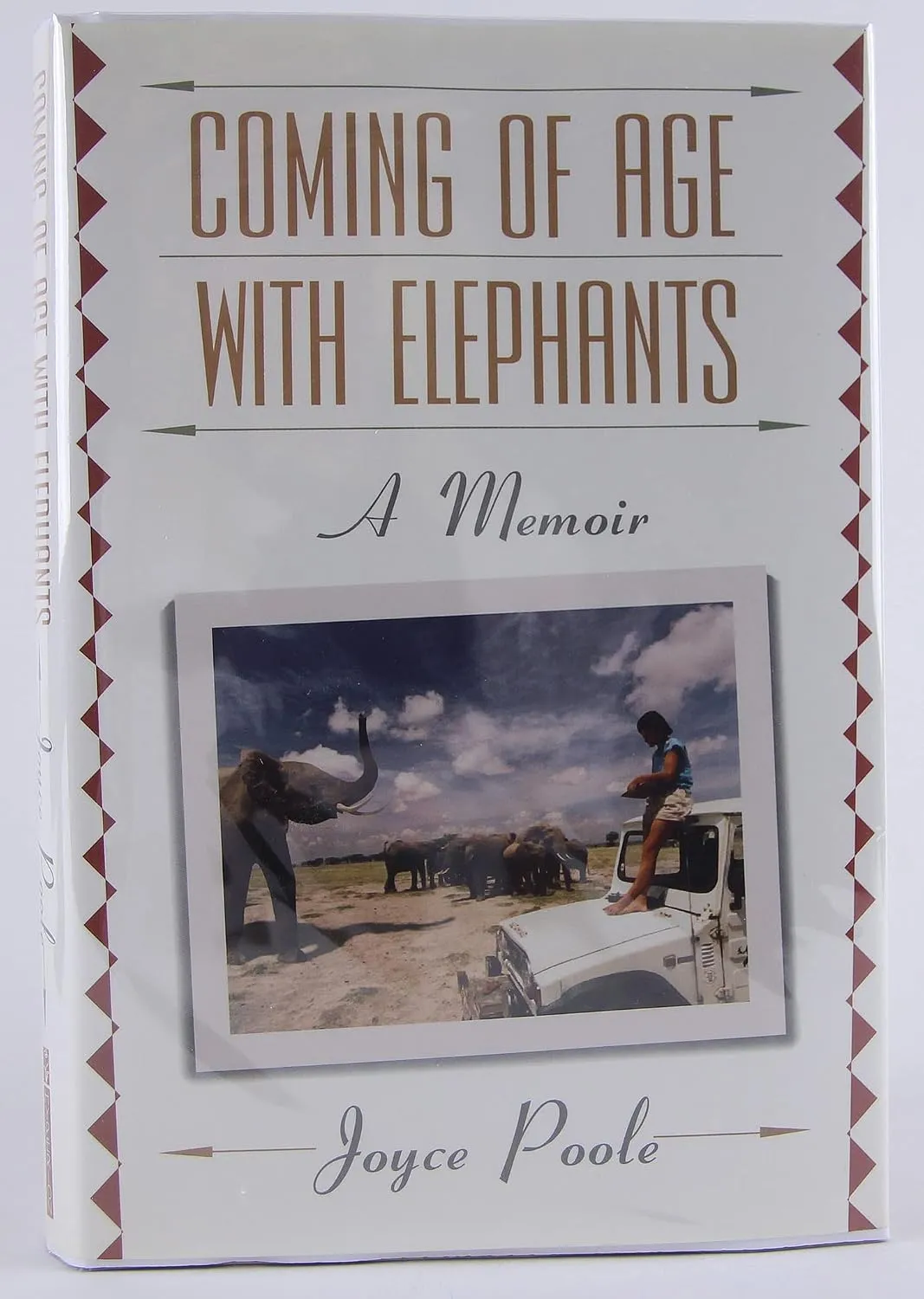 Photo: Joyce Poole, via m.media-amazon.com
Crows present a different but equally striking picture. Researchers at the University of Washington found that when crows encounter a dead crow, they gather around the body, often in large numbers, and appear to study the scene — sometimes avoiding the area afterward. The behavior seems to function as information-gathering about potential threats, but the cognitive sophistication it requires is remarkable. Crows also hold grudges, recognize individual human faces, and pass learned information across generations.
 Photo: University of Washington, via storage.googleapis.com
Fish, long dismissed as too neurologically simple to experience anything meaningful, have been generating uncomfortable findings. Studies have shown that some fish species show signs of anxiety, form social bonds, and respond to pain in ways that go beyond simple reflex. A 2021 paper in the journal PLOS ONE documented cleaner wrasse fish appearing to recognize themselves in mirrors — a test that's traditionally been used as a rough proxy for self-awareness.
And then there are octopuses, which represent perhaps the strangest case of all. These animals evolved intelligence completely independently from vertebrates — their neural architecture is nothing like ours — yet they demonstrate problem-solving, play behavior, individual personalities, and what some researchers describe as curiosity. They are, in the words of philosopher Peter Godfrey-Smith, "an independent experiment in the evolution of the mind."
Why This Has Been Slow to Land in the Culture
The science has been accumulating for years, but mainstream culture — and more importantly, mainstream law and policy — has been slow to catch up. Part of the reason is institutional momentum. Agricultural systems, laboratory research protocols, and legal definitions of animal welfare were all built on the older framework, and updating them is expensive and complicated.
There's also a psychological resistance at work. If animals experience grief, loneliness, and fear in ways that meaningfully resemble our own, then a lot of ordinary human behavior becomes harder to justify. Factory farming, certain research practices, captive wildlife entertainment — the ethical math changes when you take animal emotional experience seriously.
Scientists themselves have sometimes been cautious about the language. Attributing emotions to animals has historically been seen as anthropomorphism — projecting human qualities onto non-human creatures in a way that distorts rather than illuminates. But a growing number of researchers argue that the real distortion runs in the opposite direction: assuming that emotional complexity is uniquely human when the evolutionary evidence suggests it's more widely distributed than we've admitted.
The Line That Still Matters — And Why
None of this means all animals experience all emotions, or that every creature's inner life is equivalent to a human's. Complexity varies enormously across species, and the science is still developing. The point isn't that a goldfish experiences loss the way you do — it's that the old bright line between "creatures that feel" and "creatures that don't" was drawn in the wrong place, for the wrong reasons.
Legally, the implications are still being worked out. A handful of countries have updated their animal welfare laws to reflect newer understandings of animal sentience. The US has been slower to move, though some states have expanded protections in recent years.
The Takeaway
The assumption that emotional depth is a human patent is one of the oldest and most consequential myths we carry. The research dismantling it isn't fringe science — it's been published in major peer-reviewed journals and conducted by researchers at top institutions for two decades. What's lagging isn't the evidence. It's our willingness to follow where the evidence leads.