The Short Napoleon Story Was Invented by British Cartoonists — Here's What the Records Actually Show
The Short Napoleon Story Was Invented by British Cartoonists — Here's What the Records Actually Show
Ask anyone to describe Napoleon Bonaparte and the height thing comes up almost immediately. Short, angry, overcompensating — the whole package. It's so deeply embedded in popular culture that psychologists named a personality concept after it. There's just one problem: Napoleon wasn't actually short. Not even close to it.
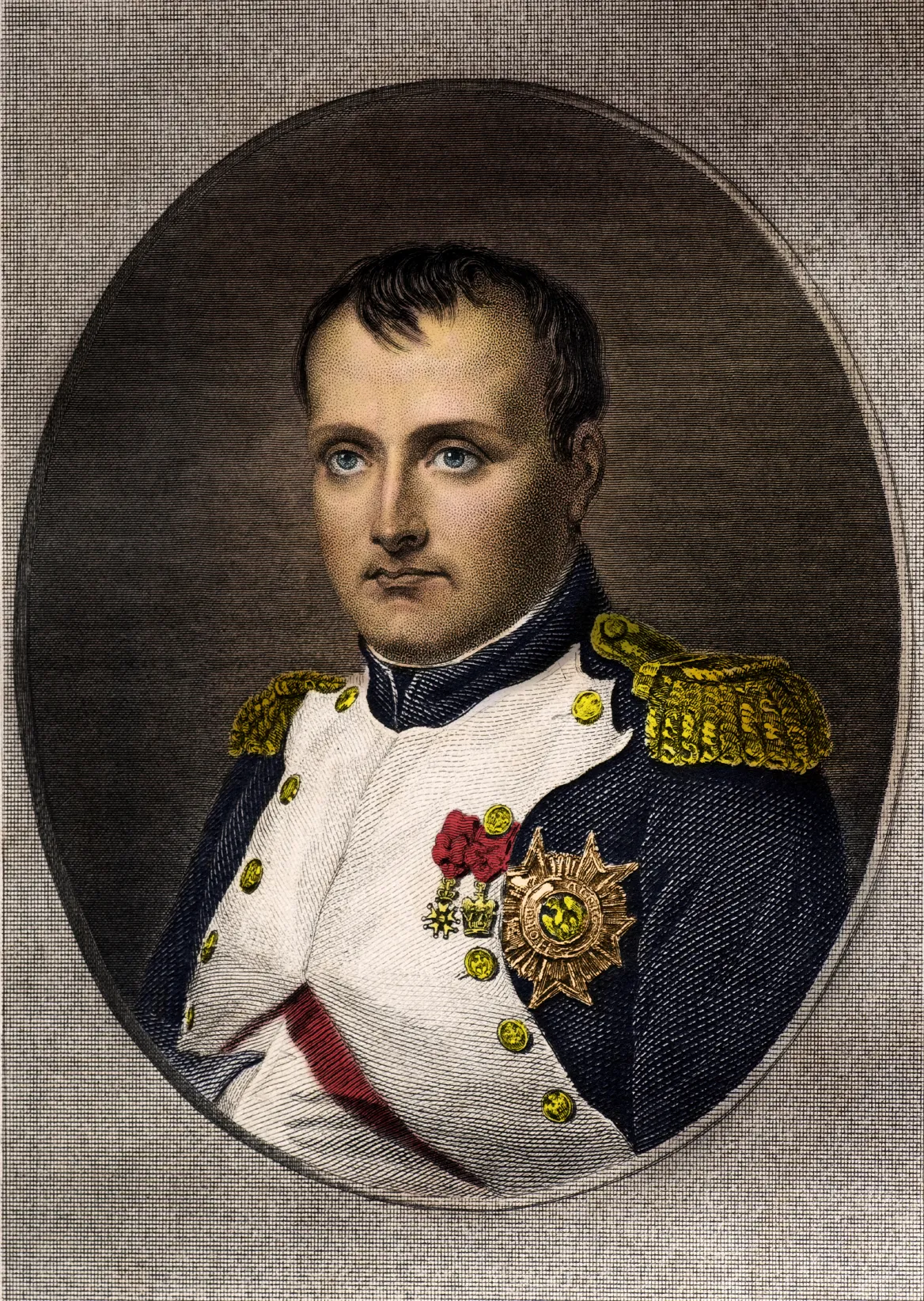 Photo: Napoleon Bonaparte, via d.ibtimes.co.uk
The real story behind this centuries-old joke is a fascinating mix of unit conversion confusion, deliberate enemy propaganda, and a single cartoonist who shaped how the world remembered one of history's most consequential figures.
What the Records Actually Say
At the time of Napoleon's death in 1821, his height was recorded as 5 pieds 2 pouces — a measurement in French units. When that figure was later translated into English, something got lost in the conversion. French inches, called pouces, are slightly longer than English inches. The correct conversion puts Napoleon at roughly 5 feet 6 or 7 inches tall.
For a Frenchman born in 1769, that was solidly average. Some historians put the typical male height in France during that era at around 5 feet 5 inches. By that standard, Napoleon was actually slightly above average for his time and place.
So where did 5'2" come from? Straight from the unit confusion. Someone read the French measurement, applied English inch values, and the number stuck — eventually hardening into accepted fact before anyone thought to double-check the math.
Enter James Gillray
Measurement errors alone don't explain why the myth became so culturally durable. For that, you need to understand the role of British wartime propaganda — and specifically, a cartoonist named James Gillray.
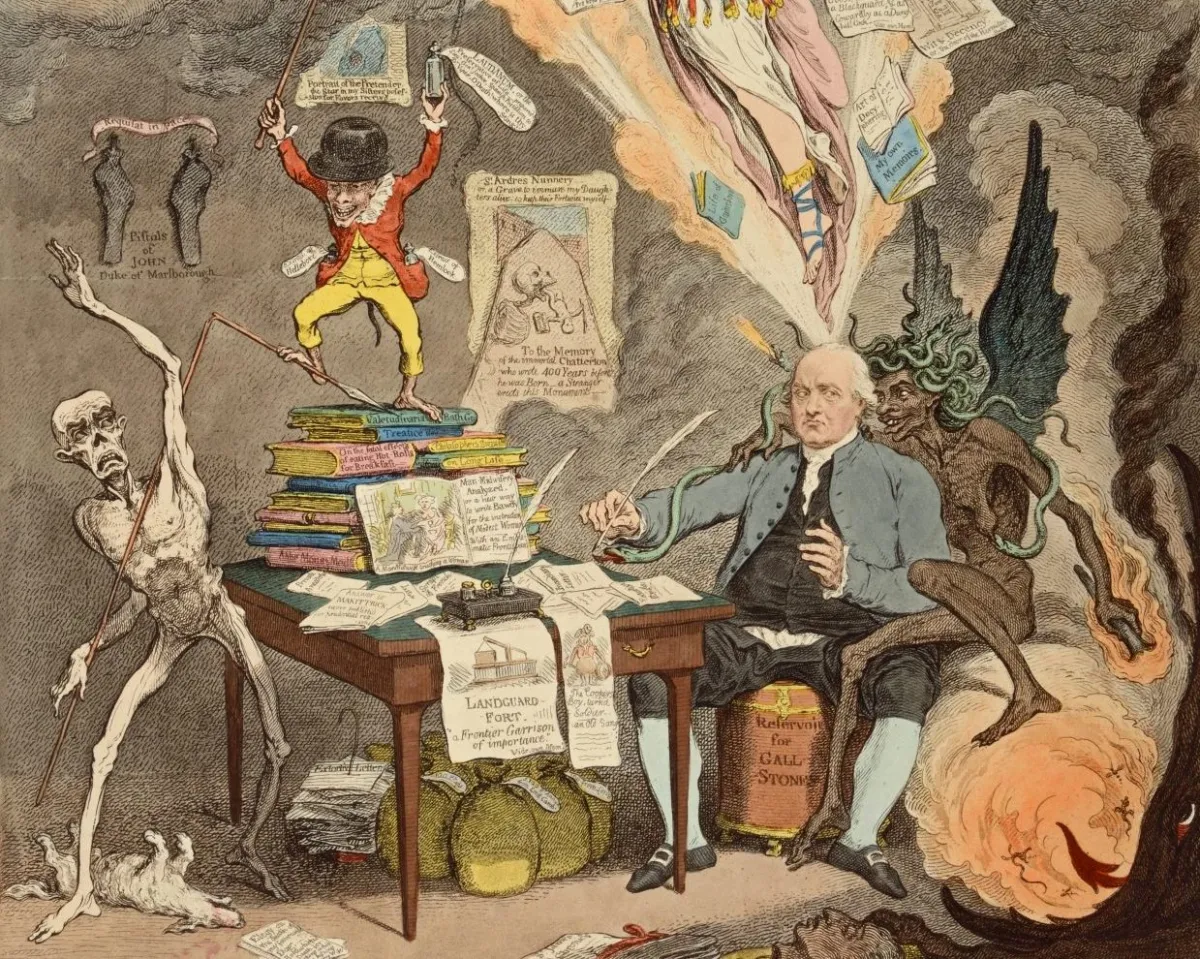 Photo: James Gillray, via gainsborough.org
Gillray was one of the most influential political satirists of the late 18th and early 19th centuries, and he had a particular gift for reducing Napoleon to a figure of ridicule. His caricatures depicted the French emperor as a tiny, tantrum-throwing child — sometimes literally drawn as a miniature figure dwarfed by British politicians or soldiers. The images were widely circulated, politically motivated, and spectacularly effective.
Britain and France were locked in near-constant conflict during Napoleon's rise to power. Mockery was a weapon, and Gillray wielded it with precision. By making Napoleon look physically small, the cartoons implied he was psychologically small too — insecure, petty, dangerous in the way that only small things overreaching themselves can be. It was character assassination through caricature, and it worked far better than any battlefield communiqué.
Why the Nickname "Le Petit Caporal" Didn't Help
Napoleon's troops affectionately called him Le Petit Caporal — "The Little Corporal." This was a term of endearment, a nod to his willingness to fight alongside common soldiers rather than commanding from a safe distance. It had nothing to do with his physical stature.
But once the British propaganda machine had already planted the short-man narrative, that nickname became easy to misread. To English-speaking audiences primed by Gillray's cartoons, "Little Corporal" sounded like confirmation of what they'd already been shown. Context collapsed, and a term of military respect got reframed as a physical description.
This is how myths tend to compound. One piece of misinformation creates a lens through which everything else gets filtered — even things that originally meant something entirely different.
Napoleon Was Surrounded by Tall Guards
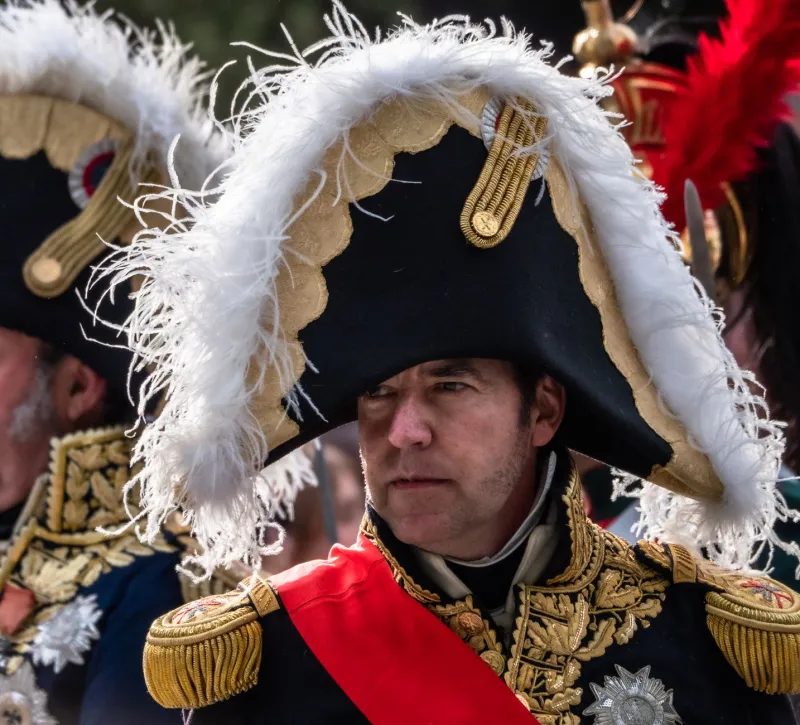
There's one more detail worth knowing. Napoleon's personal bodyguard unit, the Imperial Guard, had a strict minimum height requirement. Soldiers had to be at least 5 feet 6 inches tall to qualify. Napoleon was frequently photographed and painted in their company.
When you're regularly standing next to men selected specifically for their height, the visual contrast does something to perception. Contemporary observers who saw Napoleon in person and later described him as short may have been unconsciously comparing him to an unusually tall reference group — his own hand-picked guards.
It's a bit like standing next to a professional basketball team and concluding that you're short. Technically accurate in context, completely misleading as a general statement.
The Myth That Outlived the Man
What makes the Napoleon height myth so instructive is how thoroughly it stuck. Two centuries after his death, it's still the go-to cultural shorthand for a certain kind of overaggressive personality. It's referenced in psychology textbooks, animated films, comedy sketches, and casual conversation — all built on a foundation of botched arithmetic and enemy propaganda.
Historians have been pushing back on this for decades. The evidence isn't ambiguous or contested — the measurement conversion error is well documented, and Gillray's influence on Napoleon's public image is a studied part of media history. But corrections rarely travel as fast as the original joke.
That's the real lesson here. Wartime mockery, when it's vivid enough and repeated often enough, can rewrite a person's legacy more completely than any biography. Napoleon conquered most of Europe. What history remembered most clearly was a cartoon.
The Takeaway
Napoleon Bonaparte stood around 5 feet 7 inches — average height for a French man of his era. The "short Napoleon" image was built from a unit conversion error and amplified by deliberate British propaganda cartoons designed to undermine him politically. The myth has persisted for over 200 years not because it's accurate, but because it was entertaining and useful at exactly the right moment in history.