How America Fell in Love With Antibiotics — And Why That Romance Is Now a Medical Emergency
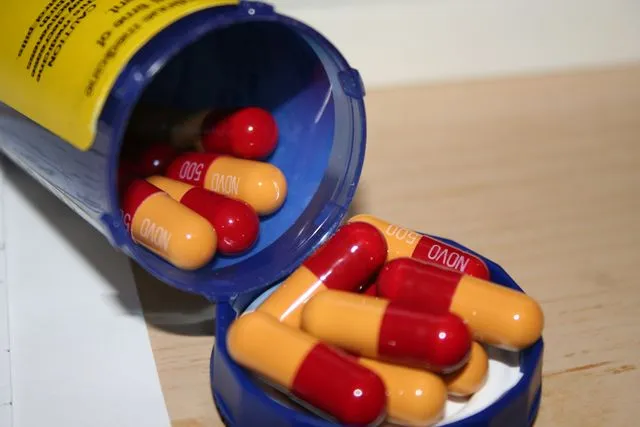
Photo: Bmramon at English Wikipedia, CC BY-SA 3.0, via Wikimedia Commons
The Drug That Changed Everything — Maybe Too Much
When penicillin became widely available after World War II, it genuinely was a miracle. Infections that had killed people for centuries suddenly became manageable. Pneumonia, scarlet fever, syphilis — diseases that had wiped out families were suddenly treatable in a matter of days. For a generation that had watched people die from infected cuts, this was nothing short of extraordinary.
That history matters, because it explains a lot about where we are today. When something works that dramatically, that reliably, and that fast, it's natural to assume it'll keep working — and to reach for it whenever something goes wrong. The problem is that the 'something' antibiotics treat is very specific, and the decades of assuming otherwise have created consequences that doctors are still struggling to contain.
What Antibiotics Actually Do
This sounds basic, but it's worth being explicit: antibiotics kill bacteria. That's it. They have no effect whatsoever on viruses.
The common cold is caused by a virus. So is the flu. So is COVID-19. So are most sore throats, most cases of bronchitis in otherwise healthy adults, and the majority of ear infections in children. Prescribing an antibiotic for any of these conditions is, from a purely clinical standpoint, the equivalent of taking a hammer to a software problem. The tool doesn't match the task.
And yet, for decades, that's exactly what happened — not because doctors didn't know better, but because of a complicated mix of patient expectations, time pressure, and a medical culture that had normalized the prescription.
How the Overprescription Habit Got Built
In the 1950s and 1960s, antibiotics were still relatively new, and the cultural script around them was being written in real time. Patients came in sick. Doctors prescribed antibiotics. Patients got better. The logical conclusion — even if the illness was viral and would have resolved on its own — was that the antibiotic had worked.
This created a feedback loop that was almost impossible to interrupt. Patients started expecting antibiotics when they went to the doctor with respiratory symptoms. Doctors, working under time pressure and knowing that a dissatisfied patient might simply go elsewhere, often prescribed them to avoid conflict. Some did it genuinely believing it might help, or reasoning that even if the illness was viral, a secondary bacterial infection might be lurking.
Pharmaceutical marketing amplified the problem. For much of the 20th century, antibiotics were promoted aggressively to both physicians and the public, reinforcing the idea that these drugs were the appropriate response to illness in general, not just bacterial illness specifically.
By the 1990s, the CDC was already raising alarms. Studies showed that roughly half of all antibiotic prescriptions in outpatient settings were unnecessary. The numbers haven't improved as much as anyone hoped.
What Happens When Bacteria Fight Back
Here's the part that makes this more than just a story about wasted medication: bacteria evolve.
Every time antibiotics are used — even appropriately — there's selective pressure on bacterial populations. Most bacteria die. But some may carry a random genetic mutation that makes them slightly harder to kill. Those survivors reproduce, passing on that resistance. Over time, and with enough antibiotic exposure, you end up with strains of bacteria that drugs can no longer touch.
This is not a theoretical risk. It's already happening.
MRSA — methicillin-resistant Staphylococcus aureus — infects hundreds of thousands of Americans every year and kills tens of thousands. Carbapenem-resistant Enterobacteriaceae, which doctors sometimes call 'nightmare bacteria,' are resistant to nearly every antibiotic currently available. The CDC estimates that antibiotic-resistant infections kill more than 35,000 Americans annually, a number that's expected to grow significantly if prescribing habits don't change.
The World Health Organization has called antimicrobial resistance one of the top global public health threats of our time. This is the downstream consequence of a myth that felt harmless — the idea that antibiotics were a safe, general-purpose fix for feeling sick.
 Photo: World Health Organization, via thumbs.dreamstime.com
The Patient Side of the Problem
It would be easy to lay this entirely at the feet of overprescribing physicians, but patients have played a real role too.
Many people still believe that antibiotics will shorten a cold or at least prevent it from getting worse. When a doctor declines to prescribe them, some patients interpret that as being undertreated — or go find a doctor who will prescribe them. In some communities, sharing leftover antibiotics is common, which means people are taking partial courses of drugs without a diagnosis, which is almost perfectly designed to breed resistance.
There's also the issue of stopping a course early. Antibiotics need to be taken for the full prescribed duration to fully eliminate an infection. Stopping when you feel better — because the drug worked — leaves surviving bacteria behind, and those are often the ones with the most resistance.
What's Actually Changing
The good news is that awareness has genuinely improved. Many major health systems now have antimicrobial stewardship programs that track prescribing patterns and push back on unnecessary use. The CDC runs public education campaigns specifically targeting the viral-versus-bacterial distinction. Some urgent care chains have adopted protocols that require physicians to document the reason for an antibiotic prescription.
Patient education has helped too. Studies show that when doctors take the time to explain why an antibiotic won't help a viral illness, most patients accept that — they just want to feel heard and have their symptoms acknowledged.
But the cultural assumption that antibiotics are the appropriate response to being sick is stubborn. It was built over generations, reinforced by millions of individual experiences where someone took an antibiotic and recovered, and it won't be undone by a single public health campaign.
The Takeaway
Antibiotics are genuinely remarkable drugs that have saved countless lives. That's exactly why misusing them is such a serious problem. They work by killing bacteria, which means they're the wrong tool for viral illness — and using the wrong tool at scale has produced resistant bacteria that are running out of treatments.
The next time a doctor tells you an antibiotic won't help your cold, that's not them being dismissive. That's them protecting both you and everyone else who might need these drugs to work when it really counts.