The Kitchen Ritual That Actually Makes Raw Chicken More Dangerous
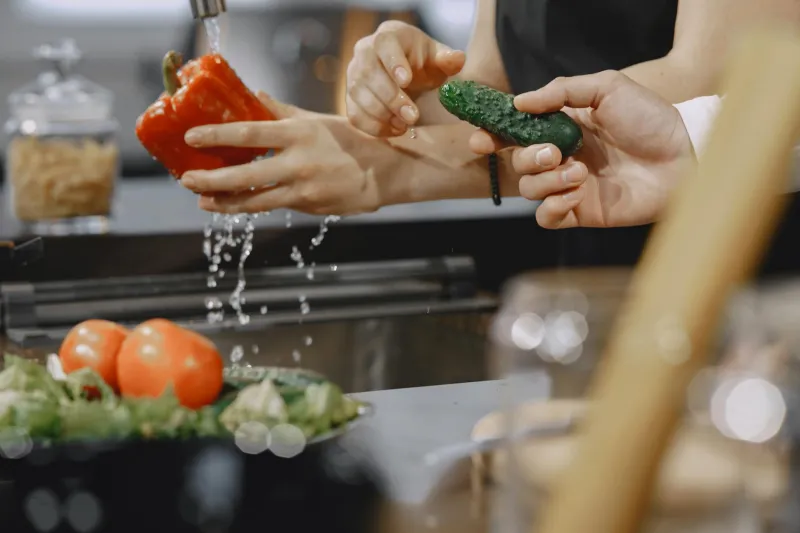
Walk into most American kitchens during dinner prep, and you'll likely witness a time-honored ritual: the careful rinsing of raw chicken under cold running water. It's a practice passed down through generations, rooted in the simple logic that washing food makes it cleaner and safer to eat.
The Habit That Won't Die
Surveys consistently show that around 70% of American home cooks rinse their raw poultry before cooking. The reasoning seems sound enough — if you wash your hands to remove germs, why wouldn't you wash your chicken to remove bacteria? Many home cooks learned this practice from their parents or grandparents, who learned it from theirs, creating an unbroken chain of kitchen wisdom that feels as natural as preheating the oven.
The ritual typically involves holding the chicken under a gentle stream of cold water, sometimes accompanied by a light rubbing motion to "clean" the surface. Some cooks go further, soaking the meat in saltwater or vinegar solutions, convinced they're taking extra precautions for their family's safety.
What Food Scientists Actually Discovered
Here's where kitchen intuition crashes into laboratory reality: rinsing raw chicken doesn't remove harmful bacteria like Salmonella and Campylobacter. Instead, it launches them on a microscopic journey around your kitchen.
When water hits raw chicken, it creates what food safety researchers call "aerosolization" — tiny droplets containing bacteria become airborne and can travel up to three feet from your sink. These invisible droplets land on nearby surfaces: your countertops, dish towels, cutting boards, and even that clean salad sitting nearby.
Studies conducted at Drexel University used fluorescent markers to track this bacterial spread. The results were eye-opening: rinsing contaminated chicken under typical home conditions spread bacteria to 60% of nearby surfaces. The harder the water pressure, the further the contamination traveled.
The USDA's Food Safety and Inspection Service now explicitly warns against washing raw poultry, stating that proper cooking to 165°F is the only reliable way to kill harmful bacteria. Unlike the surface dirt on vegetables, the bacteria on raw chicken isn't just sitting on top — it's embedded in the meat's surface and won't wash away with water.
Where This Kitchen Myth Originated
The chicken-washing tradition has deep cultural roots that made perfect sense in earlier eras. Before modern processing and refrigeration, chickens often arrived in home kitchens covered in visible dirt, feathers, and debris. A thorough rinse was genuinely necessary to remove this external contamination.
In many cultures, washing meat before cooking remains a sign of good housekeeping and respect for food preparation. Caribbean, African, and some Southern American cooking traditions specifically call for washing chicken with lime, vinegar, or salt water — practices that served multiple purposes when refrigeration was unreliable and processing standards were different.
The habit also persisted because it feels proactive. In an era where we're increasingly aware of foodborne illness, doing something — anything — to make food "cleaner" provides psychological comfort, even when that action doesn't align with current food safety science.
The Real Danger Zone
The irony is striking: the very practice intended to make chicken safer actually increases contamination risk. While proper cooking will kill any bacteria on the chicken itself, those water droplets now scattered around your kitchen create new contamination opportunities.
Consider this scenario: you rinse your chicken, then grab a clean dish towel to dry your hands. If that towel caught any bacteria-laden droplets, you've just contaminated your hands again. Touch your phone, cabinet handles, or seasoning containers, and the contamination spreads further.
Restaurant kitchens, bound by strict food safety protocols, never rinse raw poultry. Professional chefs understand that heat, not water, is their primary weapon against foodborne pathogens.
Breaking the Cycle
Changing deeply ingrained kitchen habits isn't easy, especially when they're tied to family traditions and personal beliefs about cleanliness. Food safety educators have found that simply telling people to stop washing chicken often isn't enough — they need to understand why the alternative approach is actually safer.
The key insight is redirecting that safety-conscious energy toward practices that actually reduce risk: proper hand washing, using separate cutting boards for raw meat, sanitizing surfaces with bleach solutions, and investing in a reliable meat thermometer.
The Bottom Line
Your grandmother's chicken-washing ritual came from a place of genuine care and practical necessity. But modern food processing, refrigeration, and our understanding of bacterial contamination have changed the safety equation. Today, the safest approach is counterintuitive: skip the sink, go straight to the pan, and let proper cooking temperatures do what water never could.
Sometimes the most caring thing we can do is unlearn the caring habits that no longer serve us.