The Tongue Map You Learned in School Was Wrong the Whole Time — Taste Is Way Weirder
Close your eyes and picture your elementary school science textbook. Somewhere between the solar system and the water cycle, you probably encountered a tidy diagram of a human tongue divided into distinct zones: sweet tastes at the tip, salty and sour along the sides, bitter at the back.
That map seemed so logical, so scientifically precise. Too bad it was completely wrong.
The tongue map that generations of American students memorized was based on a mistranslation of a German paper from 1901, and taste researchers quietly debunked it in the 1970s. Yet somehow, this myth kept appearing in textbooks for another fifty years.
How a Translation Error Became Scientific "Fact"
The story begins with David Hänig, a German scientist who published a study on taste sensitivity in 1901. Hänig tested how strongly people could detect different tastes at various points around the edge of their tongues.
 Photo: David Hänig, via ntvb.tmsimg.com
His results showed slight variations in sensitivity — some areas were marginally better at detecting certain tastes than others. But Hänig never claimed that different regions were exclusively responsible for specific tastes. He was measuring subtle differences, not absolute zones.
The trouble started when other scientists tried to interpret Hänig's data. In 1942, American psychologist Edwin Boring created a graph based on Hänig's numbers, but Boring's interpretation exaggerated the differences. Then, somewhere in the telephone game of scientific translation and textbook writing, those subtle variations became rigid boundaries.
By the 1960s, American science education had transformed Hänig's nuanced findings into a simple map showing four distinct taste zones. It was neat, memorable, and completely misleading.
"It's a classic example of how scientific findings can get distorted as they move from research to education," explains Dr. Linda Bartoshuk, a taste researcher at the University of Florida. "The original study was much more sophisticated than the textbook version."
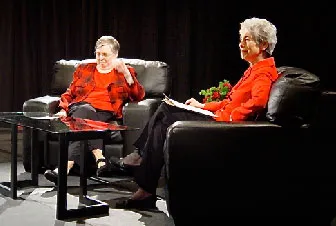 Photo: Dr. Linda Bartoshuk, via www.psychologicalscience.org
What Scientists Actually Discovered About Taste
When researchers finally tested the tongue map directly in the 1970s, they found that taste buds capable of detecting all basic tastes are distributed across the entire tongue and throughout the mouth.
You can prove this yourself right now. Put a small amount of sugar on the back of your tongue — the area supposedly reserved for bitter tastes. You'll taste sweetness immediately. Try salt on the tip of your tongue, or bitter coffee anywhere you want. Every region responds to every basic taste.
Modern research reveals that taste is far more complex and interesting than the old map suggested. Taste buds aren't just on your tongue — they're also on your soft palate, throat, and even in your nose. Some people have taste buds on their cheeks.
Each taste bud contains 50-100 taste receptor cells, and individual cells can respond to multiple types of taste compounds. Your brain integrates signals from thousands of these receptors to create the experience of flavor.
The Fifth Taste Most Americans Still Don't Know
Here's something else that old tongue map got wrong: there aren't just four basic tastes. There are at least five, and possibly more.
The fifth taste is called umami, a Japanese word roughly meaning "delicious savory taste." Umami responds to glutamates — compounds found in aged cheeses, mushrooms, tomatoes, soy sauce, and that controversial flavor enhancer MSG.
Japanese scientist Kikunae Ikeda identified umami in 1908, but Western science largely ignored it for decades. American taste researchers didn't officially recognize umami as a distinct taste until the 1980s, and it still doesn't appear in many U.S. textbooks.
 Photo: Kikunae Ikeda, via kilala.vn
"Americans have been experiencing umami their whole lives without knowing it," notes Dr. Bartoshuk. "It's why parmesan cheese tastes so good, why mushrooms are satisfying, why we add soy sauce to stir-fries. We just didn't have a name for it."
Some researchers think there might be additional basic tastes waiting to be identified. Candidates include fat (which some people seem to taste directly), calcium, and various other compounds that trigger specific receptor responses.
Why the Wrong Map Stuck Around So Long
If scientists debunked the tongue map in the 1970s, why were kids still learning it in the 2000s? The answer reveals how slowly educational materials adapt to new scientific understanding.
Textbook publishers often recycle content from previous editions, especially for basic concepts that seem settled. The tongue map appeared in so many educational materials for so long that it became "common knowledge" — the kind of fact that gets repeated without verification.
Teachers who learned the tongue map as students naturally passed it on to their own classes. Science museums created exhibits based on the familiar diagram. The myth became self-perpetuating across multiple generations of educators.
"Educational systems are remarkably resistant to change," explains Dr. Bartoshuk. "Once something becomes established in textbooks, it can persist long after the underlying science has moved on."
The tongue map also appealed to educators because it was simple and testable. Students could do taste experiments that seemed to confirm the zones, especially if they weren't looking for tastes in the "wrong" places. The myth was just convenient enough to survive.
How Taste Really Works
Modern taste science reveals a system far more sophisticated than the old map suggested. When you eat something, your taste buds detect chemical compounds and send signals to your brain via three different cranial nerves.
But taste is only part of flavor. Most of what we experience as "taste" actually comes from smell receptors in your nose, which detect thousands of different aromatic compounds. This is why food tastes bland when you have a cold — your smell receptors are blocked.
Your brain also integrates information about texture, temperature, and even sound (think about the crunch of fresh lettuce or the sizzle of fajitas). The experience of eating involves multiple sensory systems working together.
Genetics plays a huge role too. Some people have many more taste buds than others — "supertasters" who experience flavors more intensely. Others have genetic variations that make certain compounds taste completely different. Cilantro tastes like soap to about 14% of people because of specific genetic differences.
The Real Map of Your Mouth
So what does taste distribution actually look like? Instead of neat zones, imagine a complex network of receptors spread throughout your mouth and nose, with some areas slightly more sensitive to certain compounds but no region exclusively dedicated to any single taste.
Your fungiform papillae (the small bumps on your tongue tip) tend to be more sensitive to sweet and salty tastes. Your circumvallate papillae (the large bumps at the back) are better at detecting bitter compounds — which makes evolutionary sense, since bitter often signals "potentially poisonous" and you want that warning before swallowing.
But these are tendencies, not absolute rules. Every part of your tongue can detect every basic taste, and much of your flavor experience happens in your nose anyway.
What This Means for Your Next Meal
Understanding how taste really works can actually improve your eating experience. Since aroma contributes so much to flavor, paying attention to smell enhances taste. This is why wine tasters swirl and sniff, why coffee enthusiasts grind beans fresh, why great chefs care about presentation.
Knowing about umami can help you understand why certain food combinations work so well. Tomatoes and parmesan both contain glutamates — umami compounds that make each other taste better. Same with mushrooms and aged cheeses, or soy sauce and practically anything.
And if you're trying to reduce salt or sugar in your diet, understanding that taste buds are everywhere means you can't trick them by putting seasonings in specific spots. But you can use umami-rich ingredients to add satisfying flavor without extra sodium.
The Takeaway
The next time you see that familiar tongue map — and you probably will, since it's still lurking in educational materials — remember that it represents one of science education's most persistent myths.
Your tongue doesn't have neat taste zones. Instead, you have a sophisticated sensory system that detects at least five basic tastes using receptors distributed throughout your mouth and nose, then integrates that information with smell, texture, and temperature to create the complex experience we call flavor.
It's messier than the textbook version, but it's also much more interesting. And unlike the simplified map you memorized in school, it's actually true.