Lightning Never Strikes Twice? Tell That to the Empire State Building's 100 Annual Hits
Lightning Never Strikes Twice? Tell That to the Empire State Building's 100 Annual Hits
The Empire State Building gets hit by lightning about 100 times every year. The CN Tower in Toronto? Around 75 strikes annually. Meanwhile, millions of people still repeat the old saying that "lightning never strikes twice" as if it's a law of physics instead of wishful thinking.
This isn't just a harmless misconception—it's one of the most dangerous myths in weather safety.
Where the Phrase Actually Came From
The "lightning never strikes twice" saying isn't based on meteorology or electrical physics. It's a metaphor that got confused for science.
The phrase appears in various forms throughout history, usually meaning that unlikely events don't repeat in the same place. It was never meant to be a literal statement about lightning behavior—it was about probability and luck.
Somewhere along the way, people started treating the metaphor as if it described actual lightning physics. That's like taking "it's raining cats and dogs" as a veterinary weather forecast.
What Lightning Actually Does
Lightning follows the path of least electrical resistance to the ground. If a location provided a good path once, it'll probably provide a good path again. That's not coincidence—that's physics.
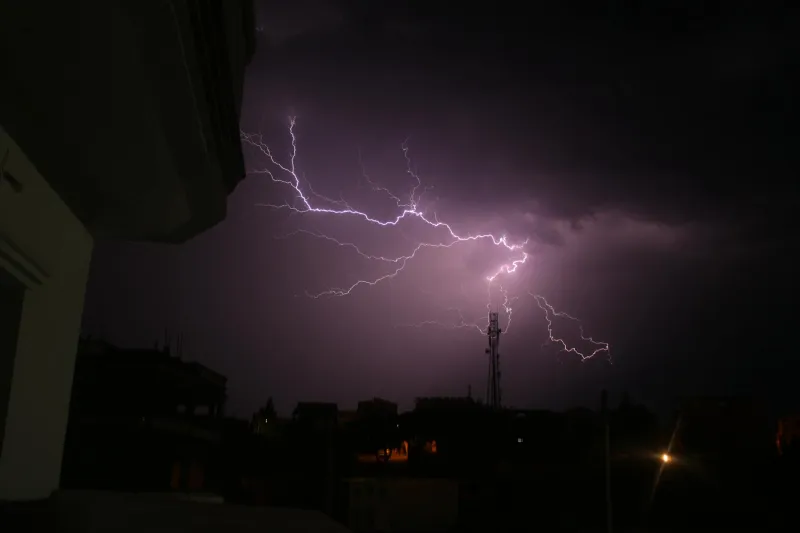
Tall structures, isolated trees, and high points in open areas get hit repeatedly because they stick up into the electrical field that builds during storms. The same geographic and structural features that attracted the first strike are still there for the second, third, and hundredth strike.
Roy Sullivan, a park ranger in Virginia, was struck by lightning seven times during his career. That wasn't incredibly bad luck—it was the predictable result of spending decades working outdoors in an area with frequent thunderstorms.
The Dangerous Behavior This Myth Encourages
Believing that lightning won't strike the same place twice leads to genuinely risky decisions during storms.
People take shelter under trees that show obvious lightning damage, figuring they're "safe" because lightning already hit there. Golfers continue playing after seeing strikes on the course, assuming the danger has passed for that location. Hikers camp near recently struck peaks, thinking they've found the one safe spot on the mountain.
All of these behaviors increase the risk of being struck, not decrease it.
Why Some Places Are Lightning Magnets
Certain geographic features practically guarantee repeated lightning strikes. Mountain peaks, isolated tall trees, and structures on open plains get hit over and over because they're the best conductors in their area.
Lake Maracaibo in Venezuela sees lightning nearly 300 nights per year, with the same general area getting struck millions of times annually. The conditions that create this lightning hotspot—geography, air currents, and atmospheric moisture—don't change from storm to storm.
In the United States, Florida's flat terrain and frequent thunderstorms make it a lightning magnet. The same radio towers, cell phone towers, and tall buildings get hit repeatedly throughout each storm season.
The Insurance Industry Knows Better
Insurance companies, whose business depends on accurately assessing risk, definitely don't believe lightning never strikes twice. They charge higher premiums for properties in lightning-prone areas and offer discounts for lightning rod installations.
Property records show that buildings in certain locations file lightning damage claims year after year. Insurance adjusters have learned to recognize the geographic and structural factors that make repeated strikes likely.
How Lightning Really Works
Lightning formation has nothing to do with whether a location was previously struck. Electrical charges build up in storm clouds regardless of ground strike history. When the electrical potential gets high enough, lightning follows the most conductive path available—which is often the same path it followed last time.
Modern lightning detection networks track strikes in real-time, and the data clearly shows clustering. The same general areas, and often the exact same structures, get hit multiple times during single storms and across storm seasons.
What Weather Services Actually Recommend
The National Weather Service doesn't mince words about lightning safety: "If you can hear thunder, you're close enough to be struck by lightning." They make no exceptions for previously struck locations.
Their safety guidelines specifically warn against sheltering under trees, even if they don't show lightning damage. The safest places during lightning storms are substantial buildings with plumbing and electrical systems, or fully enclosed metal vehicles.
Outdoor workers in lightning-prone jobs—construction, agriculture, golf course maintenance—are trained to treat every location as equally dangerous during storms, regardless of strike history.
The Real Statistics
Lightning kills about 20 people per year in the United States and injures around 400 more. Many of these incidents involve people who thought they were safe because they were in locations that had been struck before.
The myth that lightning doesn't strike twice has contributed to deaths and injuries that could have been prevented with better understanding of how lightning actually behaves.
Breaking the Dangerous Myth
The next time someone uses "lightning never strikes twice" to justify risky behavior during a storm, remind them that the Empire State Building's lightning rod system gets a workout every single year.
Lightning doesn't care about metaphors, sayings, or what seems fair. It follows physics, and physics says that good conductors in exposed locations will keep getting hit as long as thunderstorms keep forming.
The phrase might work fine as a metaphor for rare coincidences, but when it comes to actual lightning safety, it's not just wrong—it's potentially deadly. When you hear thunder, the smart move is to get inside a substantial building or vehicle, regardless of whether lightning has struck that area before.
Your safety shouldn't depend on folk wisdom from an era when people didn't understand atmospheric electricity.