The Full Moon Doesn't Control You — But Here's What Actually Does
The Full Moon Doesn't Control You — But Here's What Actually Does
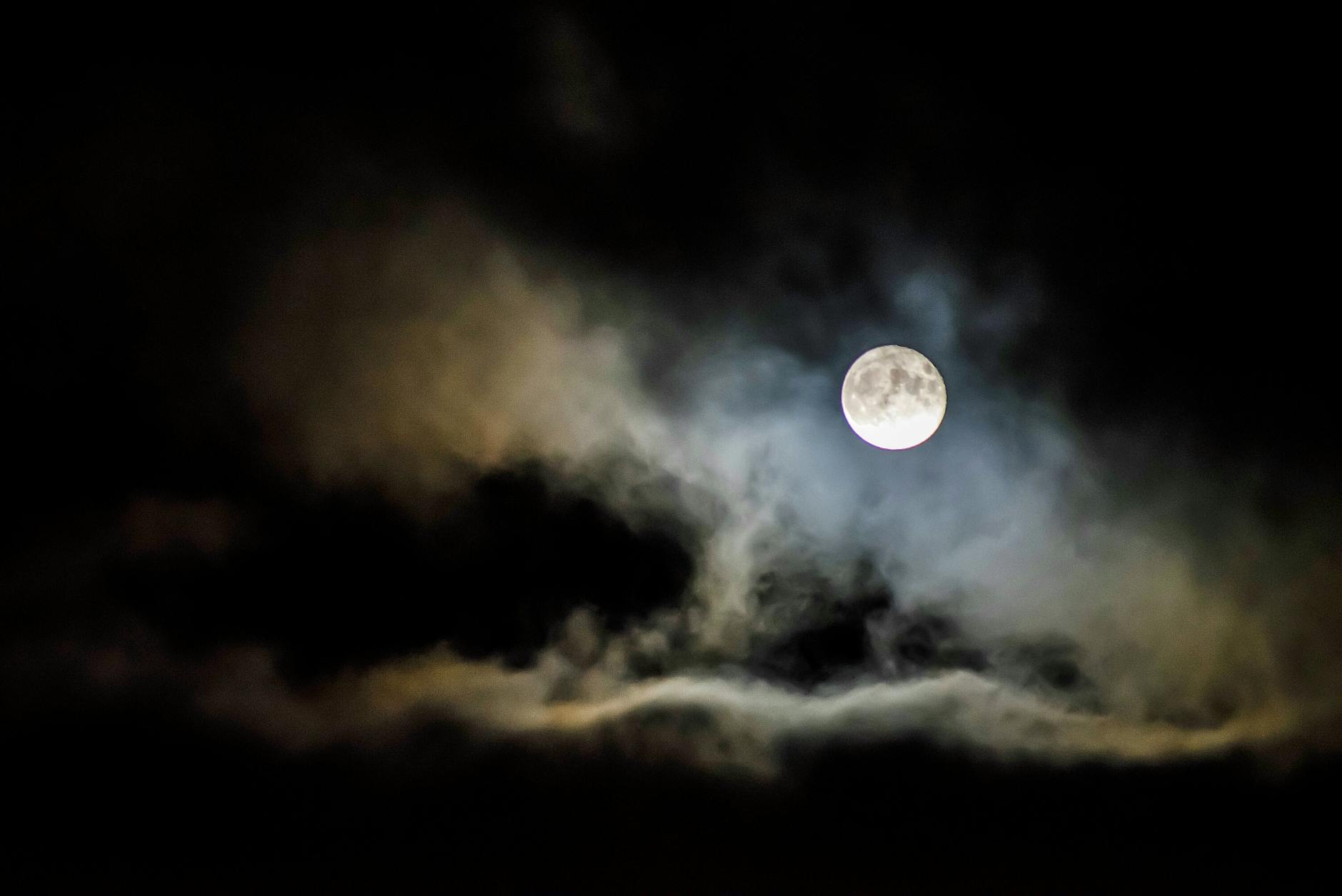
Ask any ER nurse or police dispatcher and there's a decent chance they'll tell you: full moon nights are something else. More chaos, more drama, more of everything. It's practically professional folklore at this point. The word "lunatic" literally comes from luna, the Latin word for moon. Werewolf mythology, astrology, sleepless nights — the moon has had a starring role in human behavior stories for millennia.
There's just one stubborn problem: the data doesn't back it up.
What the Research Actually Finds
Over the past several decades, researchers have put the lunar effect hypothesis through serious testing. The results have been remarkably consistent — and remarkably unimpressive for the moon.
A 1985 meta-analysis published in Psychological Bulletin examined 37 studies looking at the relationship between lunar cycles and behavior, including psychiatric admissions, criminal activity, and crisis calls. The conclusion: no meaningful connection. A 1996 follow-up review covering additional studies reached the same result.
Sleep research has been particularly thorough. A frequently cited 2013 study from the University of Basel in Switzerland claimed to find that people slept about 20 minutes less and showed lower melatonin levels around the full moon. That study got enormous media coverage. What got less coverage was the follow-up: when researchers attempted to replicate the findings with larger, better-controlled samples, the effect disappeared. A 2021 analysis of sleep data from over 5,800 people across multiple countries found no consistent lunar pattern in sleep duration or quality.
Studies examining emergency room admissions, psychiatric crisis calls, and crime reports have similarly failed to find reliable spikes on full moon nights once researchers control for confounding factors — like the fact that full moons mean more light at night, which historically meant more people out and about.
So if the effect isn't real, why does it feel so real to so many people?
Your Brain Is a Pattern Machine — Sometimes Too Good at It
Humans are wired to find patterns. It's one of our most powerful cognitive tools, and it's also one of our most reliable sources of error.
The phenomenon at work here is called confirmation bias — the tendency to notice and remember information that confirms what we already believe, while discounting or forgetting information that contradicts it. If you believe full moons cause weird nights, you will remember every chaotic full moon shift and forget every calm one. The calm ones don't get a story. The wild ones do.
There's a companion effect called the clustering illusion, where our brains perceive meaningful patterns in random data. Full moons happen roughly once a month. Unusual events — a difficult patient, a strange call, a terrible night's sleep — also happen regularly. Sometimes they'll overlap purely by chance. When they do, the moon gets the credit.
Researchers have a name for this broader tendency: apophenia, the experience of seeing connections between unrelated things. It's not a flaw unique to gullible people. It's a feature of normal human cognition, and it's especially active when we've been primed to expect a pattern in the first place.
So What Actually Affects Your Sleep and Mood?
If the moon isn't pulling the strings, the real culprits are a lot less dramatic — but considerably more actionable.
Light exposure is the big one. Your circadian rhythm, the internal clock that regulates sleep and wakefulness, is exquisitely sensitive to light. Evening exposure to blue-spectrum light — from phones, laptops, and LED lighting — suppresses melatonin production and delays sleep onset. This is a real, well-documented, consistently replicated effect. The irony is that people worried about full moon sleep disruption are often lying awake scrolling through articles about full moon sleep disruption.
Stress and cognitive load matter enormously. Mood and sleep quality track closely with what's actually going on in your life — work pressure, relationship friction, financial anxiety. These factors are less poetic than the moon but far more predictive. A 2020 survey by the American Psychological Association found that financial stress alone was a top sleep disruptor for a significant portion of American adults.
Sleep consistency is underrated. Irregular sleep schedules — going to bed at wildly different times on weekdays versus weekends — fragment the circadian rhythm in ways that show up clearly in mood, cognitive function, and energy. Researchers call this "social jet lag," and it affects a substantial chunk of the working population.
Seasonal light changes are also genuinely powerful. The reduction in daylight hours during fall and winter affects serotonin and melatonin production in ways that can influence mood and sleep for months at a time — a much larger and more consistent effect than any lunar cycle.
Why the Moon Myth Won't Die
Beyond confirmation bias, there's a cultural dimension to this. The lunar influence narrative is ancient, cross-cultural, and deeply embedded in literature, religion, and folk medicine. It gives people a framework for explaining inexplicable nights and turbulent feelings. "The moon is full" is a satisfying answer in a way that "you've been under unusual stress and your sleep schedule shifted" simply isn't.
Media coverage amplifies the effect. Studies that find a lunar connection — even weak, preliminary ones — generate headlines. Studies that find nothing tend not to. This creates a skewed public impression of where the scientific consensus actually sits.
The Takeaway
The moon is genuinely remarkable. It stabilizes Earth's axial tilt, drives ocean tides, and has guided human navigation and agriculture for thousands of years. It deserves its cultural prominence.
But it is not responsible for your insomnia, your coworker's mood swing, or the bizarre call your friend got last Tuesday night. Those have explanations — just less cinematic ones. And understanding the real drivers of sleep and emotional wellbeing is a lot more useful than checking the lunar calendar.