Eye Doctors Kept Repeating the Dim Light Warning Despite Lacking Evidence
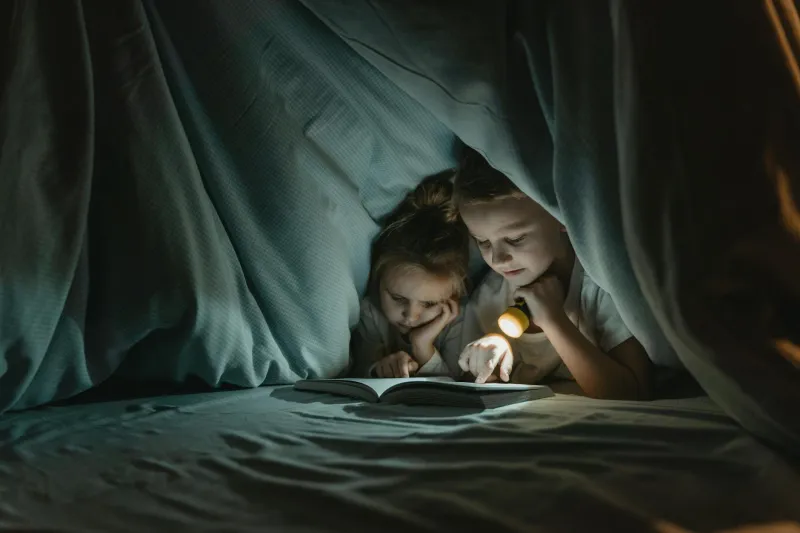
The Flashlight Under the Covers Fear
Millions of American children have heard the same warning: "Stop reading in the dark — you'll ruin your eyes!" Parents confiscated flashlights, installed brighter bedside lamps, and worried that their book-loving kids were heading toward thick glasses and vision problems.
The fear felt reasonable. Straining to see text in poor lighting seems obviously harmful, like lifting weights that are too heavy or running on a twisted ankle.
But ophthalmologists have quietly known for years that this household rule isn't supported by clinical evidence.
What Eye Strain Actually Does
When you read in dim light, your eyes work harder. The pupils dilate to let in more light. The focusing muscles contract more forcefully. Your blink rate decreases as you concentrate.
This creates genuine discomfort: tired eyes, headaches, difficulty focusing. These symptoms feel serious enough that parents naturally assume lasting damage is occurring.
Dr. Rachel Bishop, chief of the Consult Services Section at the National Eye Institute, explains the reality: "There is no scientific evidence that reading in dim light causes permanent eye damage. You may get eye fatigue, but it won't hurt your vision in the long term."
The fatigue is real, but it's temporary — like muscle soreness after exercise.
Where the Warning Likely Originated
The dim light warning probably made more sense generations ago. Early electric bulbs produced harsh, flickering light that genuinely strained eyes. Gas lamps and candles created inconsistent illumination that forced constant visual adjustment.
In that era, poor lighting conditions could cause significant eye fatigue and discomfort. The advice to "get better light" was practical guidance for immediate comfort, not long-term eye health.
But as lighting technology improved, the warning evolved from "this is uncomfortable" to "this will damage your vision permanently." The message became more dramatic while the scientific basis remained absent.
Why Medical Professionals Repeated Unproven Claims
Here's where the story gets interesting: many eye doctors continued recommending good lighting even when research didn't support the permanent damage claim.
Part of this stems from medical training that emphasizes conservative advice. If something might be harmful and avoiding it costs nothing, why not recommend caution?
Plus, the advice wasn't entirely wrong — good lighting does make reading more comfortable. It just doesn't prevent vision problems like doctors and parents believed.
Dr. Ming Wang, an ophthalmologist and founder of the Wang Vision Institute, notes that medical education often perpetuates traditional wisdom: "Many things we learned in medical school were based on clinical observation rather than rigorous scientific study."
What Actually Affects Long-Term Vision
While dim light reading won't damage your eyes, other factors genuinely do influence vision development:
Screen time and near work: Extended close-up activities, especially on digital devices, correlate with increased myopia rates. The mechanism isn't fully understood, but the statistical connection is strong.
Outdoor exposure: Children who spend more time outside have lower rates of nearsightedness. Natural light exposure appears protective, though researchers are still investigating why.
Genetics: Family history remains the strongest predictor of vision problems. If both parents are nearsighted, their children have roughly a 50% chance of developing myopia regardless of reading habits.
Age-related changes: Most vision changes result from normal aging processes — lens flexibility, retinal health, and eye pressure changes that have nothing to do with childhood reading conditions.
The Modern Lighting Paradox
Today's children actually face the opposite problem from previous generations. LED screens and energy-efficient bulbs can produce harsh blue light that disrupts sleep patterns. The concern has shifted from "not enough light" to "too much of the wrong kind of light."
Yet parents still warn about reading in dim conditions while allowing unlimited screen time on devices that produce far more eye strain than any book under a flashlight.
Why the Myth Persists
The dim light warning survives because it feels intuitively correct and connects to genuine parental concerns about children's health and academic habits.
Parents want their kids to read, but they also want to protect their vision. The lighting rule seemed to accomplish both goals — encouraging good study habits while preventing future problems.
The advice also became embedded in family traditions. Parents who heard the warning from their own mothers naturally passed it along, creating generational momentum that outlasted the scientific understanding.
What Eye Doctors Actually Recommend Now
Modern ophthalmologists focus on evidence-based vision protection:
- Encourage outdoor play to potentially reduce myopia risk
- Recommend the 20-20-20 rule for screen use: every 20 minutes, look at something 20 feet away for 20 seconds
- Suggest comfortable lighting for reading — not to prevent damage, but to reduce fatigue
- Emphasize regular eye exams to catch actual problems early
The Real Story
Reading in dim light won't ruin your eyesight, but generations of parents and doctors believed it would. The warning persisted because it felt reasonable, addressed real discomfort, and seemed harmless to follow.
This reveals something important about how medical advice evolves. Sometimes what "everyone knows" isn't based on rigorous evidence — it's based on reasonable assumptions that nobody bothered to test scientifically.
Your eyes are remarkably adaptable organs designed to function in varying light conditions. They'll work harder in dim light and feel tired afterward, but they won't suffer permanent damage from the effort.
The next time you catch yourself reading by phone flashlight, remember: your eyes might get tired, but your vision will be fine.