Buying Local Food Feels Virtuous — The Environmental Math Is Messier
Buying Local Food Feels Virtuous — The Environmental Math Is Messier
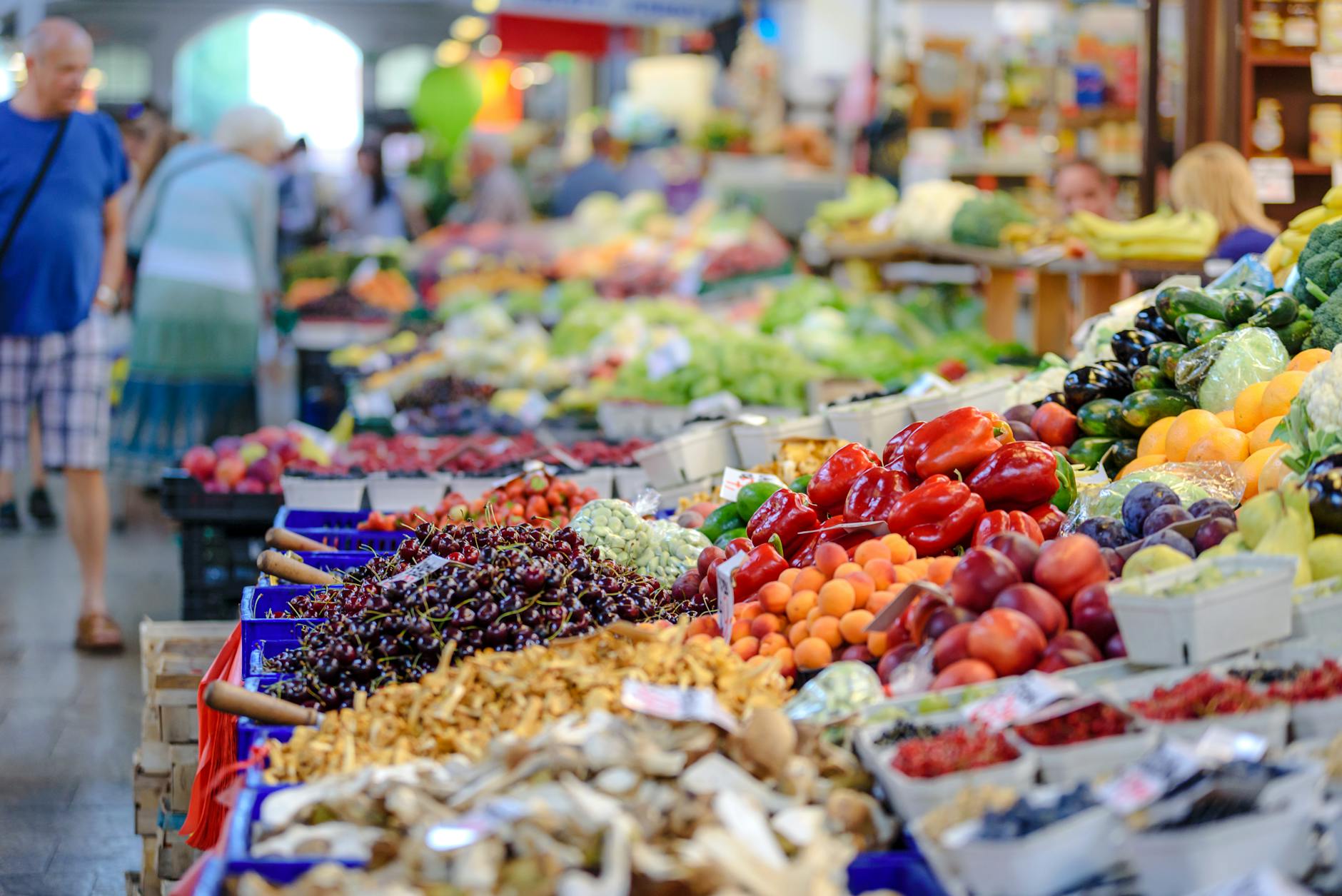
There's a particular satisfaction in loading up a canvas tote at a Saturday farmers market. You're supporting a local grower, you're cutting out the industrial supply chain, and you're doing something good for the planet. It feels like one of those rare cases where the ethical choice and the enjoyable choice line up perfectly.
The environmental part of that story, though, is worth looking at more carefully. Not because local food is bad — it isn't — but because the reasoning most people use to justify its green credentials turns out to be built on a significant oversimplification.
The 'Food Miles' Idea and Where It Came From
The concept of "food miles" — measuring the environmental impact of food by how far it traveled to reach you — emerged in the early 1990s, popularized largely through the work of British researcher Tim Lang. The intuition behind it is appealing and logical: transportation burns fuel, fuel produces emissions, therefore shorter distances mean lower emissions. Eat local, shrink your footprint.
The problem is that transportation is only one piece of a very large and complicated puzzle. And it turns out to be a surprisingly small piece.
A landmark 2008 study by researchers at Carnegie Mellon University analyzed the full lifecycle emissions of food consumed in the United States — from land preparation and fertilizer production through growing, processing, packaging, transportation, and home storage. Their finding was striking: transportation from producer to retailer accounted for only about 4% of the average food item's total greenhouse gas emissions. The dominant factor, responsible for roughly 83% of emissions, was the production phase itself — what happens on the farm.
A follow-up consideration that often gets missed: the "last mile" of food transportation — your personal drive to the store or market — can actually represent a meaningful share of that 4%, especially if you're making a special trip in a car.
The Heated Greenhouse Problem
Here's where the local food calculation gets genuinely uncomfortable for some people: a tomato grown in a heated greenhouse in, say, Ohio in February may have a substantially larger carbon footprint than a tomato shipped from a farm in Mexico or California.
Heating a greenhouse through a cold winter requires significant energy — natural gas, in most cases. The emissions from that heating can dwarf the emissions from transporting a field-grown tomato from a warmer climate. Swedish researchers studying this exact scenario found that locally grown tomatoes in cold-climate greenhouses produced several times the emissions of imported Spanish tomatoes, largely because of heating energy.
The same logic applies to other out-of-season produce. Strawberries in January, lettuce in Minnesota in March, herbs in a New England winter — growing these things locally often requires artificial climate control that carries its own substantial environmental cost.
This doesn't mean you should stop buying from local producers. It means the calculation is more nuanced than distance alone.
What Actually Drives Food's Environmental Footprint
If transportation is a minor variable, what matters most? Research consistently points to a few key factors.
What you eat matters far more than where it came from. Animal products — especially beef and lamb — carry dramatically higher emissions per calorie than plant-based foods, regardless of origin. Beef production involves methane emissions from livestock, land use for grazing and feed crops, water consumption, and fertilizer use at a scale that dwarfs the transportation footprint of almost any food. A 2018 study published in Science found that even the lowest-impact beef produces significantly more greenhouse gas than the highest-impact plant proteins.
A person who eats beef regularly but buys it from a local ranch is almost certainly generating more food-related emissions than someone who eats plant-heavy meals with imported ingredients.
Land use and deforestation are major drivers. Expanding agricultural land — especially by clearing forests — releases enormous amounts of stored carbon. Where and how land is used matters a great deal to the overall emissions picture.
Farming methods vary widely. Regenerative agriculture practices, reduced synthetic fertilizer use, and soil carbon sequestration can meaningfully change the emissions profile of similar products from different farms. Two farms growing the same crop in the same region can have very different environmental footprints depending on their practices.
What Local Food Actually Does Well
None of this is an argument against local agriculture. There are genuine and meaningful benefits — they're just different from the ones most often cited.
Local food systems can support biodiversity by sustaining smaller farms that grow a wider variety of crops rather than monocultures optimized for industrial yield. They can reduce packaging waste, since produce sold at farmers markets often involves less plastic and processed packaging than supermarket equivalents. They support local economies and often create more direct relationships between consumers and the people growing their food.
For some products — eggs, dairy, certain vegetables in season — the local option may genuinely have a lower footprint, particularly if it involves pasture-raised animals or low-energy production methods.
And there's something legitimate about the transparency local sourcing can offer. Knowing your farmer, understanding their practices, and being able to ask how something was grown is a form of food accountability that industrial supply chains rarely provide.
A More Useful Framework
Instead of asking "how far did this travel?" the more environmentally useful questions tend to be:
- What is it? Choosing plant-heavy meals over frequent meat consumption has a larger impact than any sourcing decision.
- Is it in season? Seasonal produce grown in your region without artificial climate control is genuinely lower-impact.
- How was it produced? Farming practices, fertilizer use, and land management matter more than zip codes.
- How much are you wasting? Food waste is one of the largest contributors to food-related emissions globally. A local tomato that gets thrown out is worse than an imported one that gets eaten.
The Takeaway
The farmers market isn't a scam, and supporting local agriculture isn't misguided. But "local" as a blanket environmental virtue is a story that got simplified somewhere along the way — and the simplification stuck because it's intuitive, feel-good, and easy to act on.
The real environmental picture of food is dominated by what's on your plate, not the miles it logged to get there. That's a more complicated message, but it's also a more empowering one: the choices with the biggest impact are ones you make every single meal.