Your Creative Brain Doesn't Live in Just One Side — Pop Psychology Made That Up
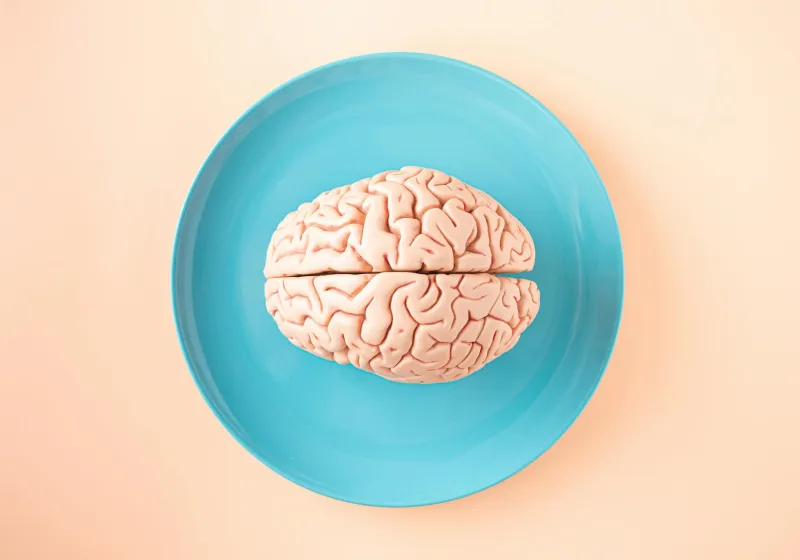
Walk into any American office or classroom, and you'll hear people casually describe themselves as "left-brained" analytical types or "right-brained" creative personalities. Online quizzes promise to reveal which hemisphere dominates your thinking style. Career counselors still use this framework to guide job recommendations.
There's just one problem: neuroscientists have spent decades looking for evidence that people actually favor one brain hemisphere over another for different types of thinking, and they've come up empty-handed.
The Nobel Discovery That Started Everything
The left-brain, right-brain personality theory traces back to legitimate scientific research from the 1960s. Roger Sperry won the 1981 Nobel Prize in Medicine for his groundbreaking work with "split-brain" patients — people who had undergone surgery to sever the connection between their brain hemispheres as a treatment for severe epilepsy.
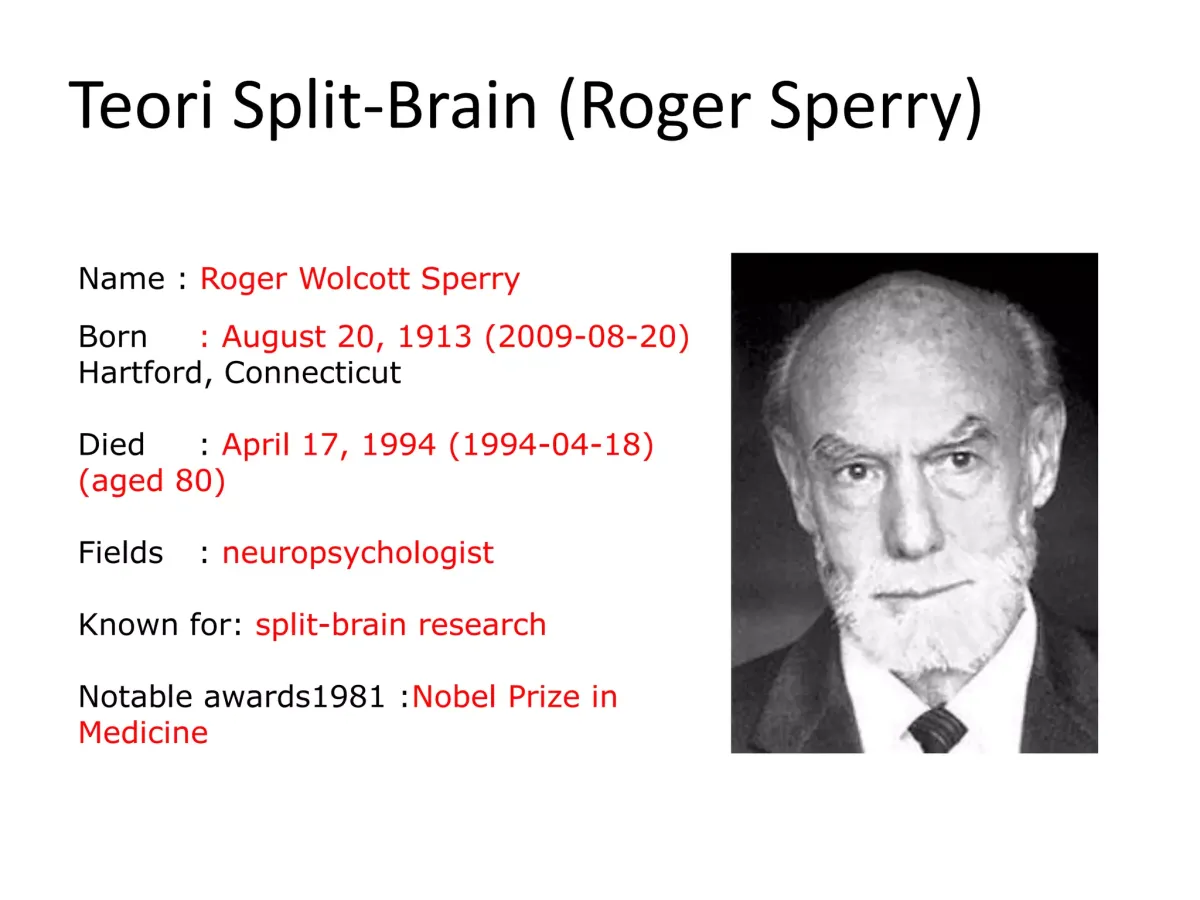 Photo: Roger Sperry, via image.slidesharecdn.com
Sperry's experiments revealed fascinating differences in how the isolated hemispheres processed information. The left hemisphere excelled at language and sequential processing, while the right hemisphere showed strengths in spatial recognition and pattern detection. These were genuine, measurable differences in brain function.
But here's the crucial detail that got lost: Sperry was studying people whose brains had been surgically altered. Their hemispheres could no longer communicate with each other — a condition that doesn't exist in healthy brains.
How Self-Help Books Created a Personality System
By the mid-1970s, popular psychology had seized on Sperry's research and run wild with it. Books like "Drawing on the Right Side of the Brain" by Betty Edwards became bestsellers by promising to unlock hidden creative potential through "right-brain" exercises.
 Photo: Betty Edwards, via images.squarespace-cdn.com
The transformation was dramatic: legitimate neuroscience about surgically separated brain hemispheres morphed into a complete personality classification system for normal, healthy brains. Suddenly, being "left-brained" meant you were logical, analytical, and mathematical. Being "right-brained" meant you were creative, intuitive, and artistic.
Educational consultants began designing "whole-brain" teaching methods. Corporate trainers used hemisphere preferences to build teams. The concept felt scientific enough to be credible but simple enough for anyone to understand and apply.
What Your Brain Actually Does
Modern brain imaging technology has revealed something much more complex and interesting than the pop psychology version suggests. When neuroscientists scan healthy brains during various tasks, they consistently find both hemispheres working together.
Solving math problems? Both sides activate, with the right hemisphere contributing spatial processing and the left handling symbolic manipulation. Creating art? The left hemisphere manages technique and planning while the right processes visual-spatial elements. Even language — supposedly a pure left-brain function — involves right-hemisphere contributions for understanding context, emotion, and metaphor.
A 2013 study from the University of Utah analyzed brain scans from over 1,000 people, specifically looking for evidence of hemisphere dominance in personality traits. The researchers found no correlation between stronger left or right hemisphere activity and different thinking styles or personality characteristics.
Why the Myth Won't Die
Despite decades of contradictory evidence, the left-brain, right-brain personality framework remains incredibly popular in American culture. There are several reasons why this particular misconception has such staying power.
First, it provides a simple explanation for complex human differences. Rather than grappling with the messy reality of individual strengths, learning styles, and personality variations, the hemisphere theory offers clean categories that feel scientific.
Second, it validates existing self-perceptions. People who see themselves as logical feel confirmed when they test as "left-brained." Those who consider themselves creative get validation from "right-brained" results. The framework tells people what they already believe about themselves.
Third, it's become embedded in educational and corporate systems. Teachers design lesson plans around "whole-brain learning." Managers use hemisphere preferences for team building. These institutional applications create a feedback loop that reinforces the concept's apparent legitimacy.
The Real Story About Brain Differences
This doesn't mean all brains work identically. Individual differences in cognitive strengths, processing styles, and creative approaches are very real — they just don't map onto a simple left-hemisphere versus right-hemisphere divide.
Some people excel at mathematical reasoning while others shine in visual arts, but these differences involve complex networks spanning both brain hemispheres. Personality traits like introversion, openness to experience, and analytical thinking have their own neural correlates that don't respect hemispheric boundaries.
The most remarkable thing about human brains isn't that they split functions between left and right sides — it's how seamlessly the two hemispheres integrate information to create unified thoughts, emotions, and experiences.
The Bottom Line
The next time someone describes themselves as a "right-brained creative type" or dismisses their artistic abilities because they're "too left-brained," remember that neuroscience tells a different story. Your entire brain contributes to everything you think, feel, and create.
The real lesson from Roger Sperry's Nobel Prize-winning research wasn't that people should identify with one brain hemisphere over another — it was that the two sides work better together than apart.