That 98.6°F Number on Your Thermometer? It Came From One Guy in 1851
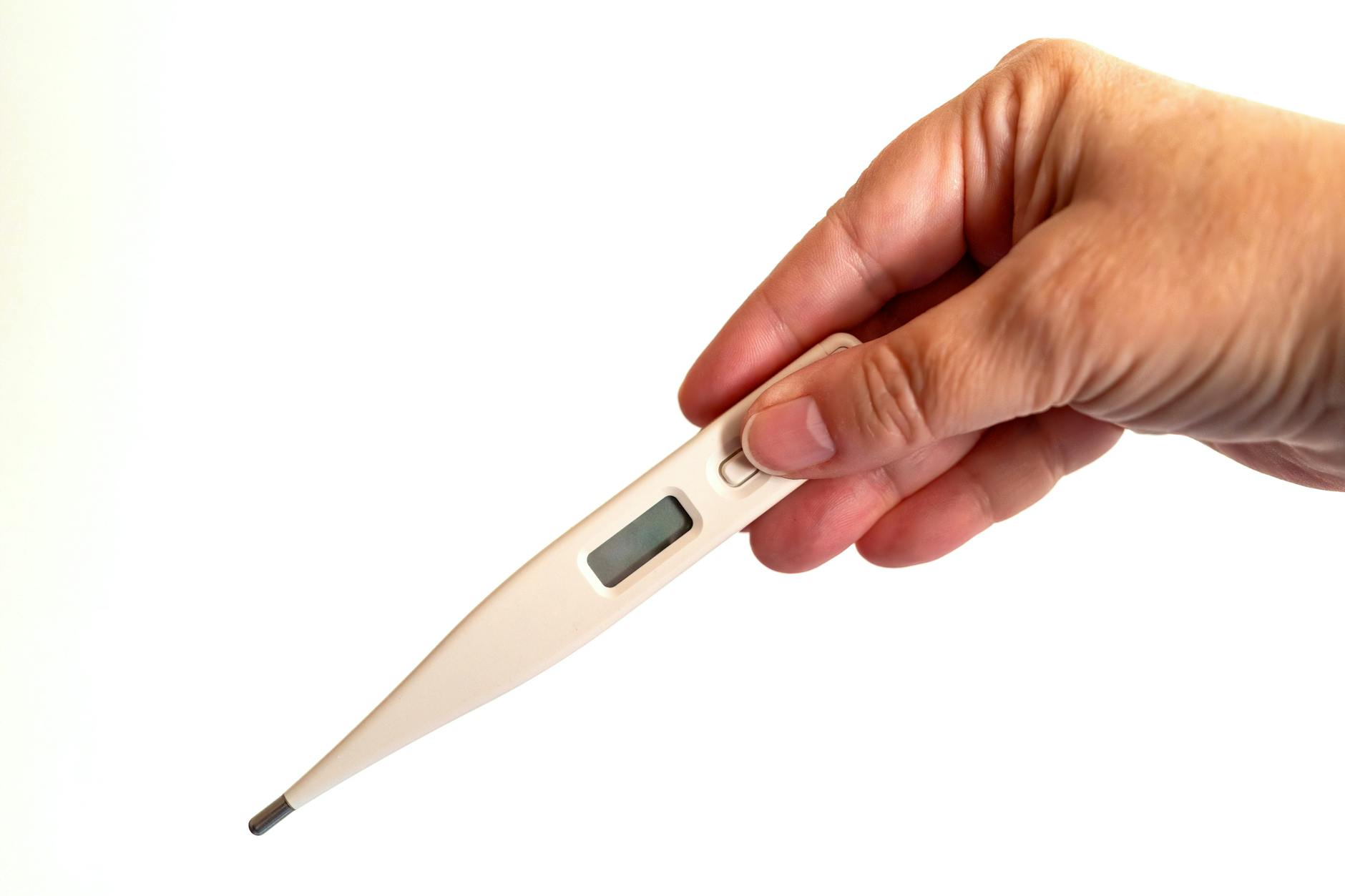
That 98.6°F Number on Your Thermometer? It Came From One Guy in 1851
Every time you stick a thermometer under your tongue and see 98.6°F staring back at you, you're essentially consulting the ghost of a German doctor who did his research before the American Civil War. That number — so precise, so authoritative-looking — has been printed on packaging, cited by physicians, and repeated by parents for over 150 years. And for most of that time, almost nobody stopped to ask whether it was actually right.
It wasn't. Or at least, it isn't the whole story.
Where Did 98.6°F Even Come From?
In 1851, a Leipzig physician named Carl Reinhold August Wunderlich set out to do something genuinely ambitious for his era: systematically measure human body temperature across a large population. By the time he published his findings in 1868, he had compiled temperature readings from roughly 25,000 patients — an impressive sample size by any historical standard.
His conclusion? The average healthy human body temperature was 37 degrees Celsius, which converts to exactly 98.6 degrees Fahrenheit.
The problem isn't that Wunderlich was careless. For his time, he was remarkably thorough. The problem is the equipment he used. His thermometers were early-generation devices that took up to 20 minutes to register a reading and were known to run slightly high compared to modern instruments. Researchers who later tested surviving thermometers from that period found they consistently read about 1 to 1.5 degrees Celsius warmer than calibrated modern equivalents. That's not a rounding error — that's a meaningful gap when you're defining "normal."
And yet, 98.6°F stuck around. It got absorbed into medical textbooks, then into popular culture, and eventually into the firmware of every urgent care visit in America.
What Modern Research Actually Shows
Scientists didn't just accept Wunderlich's number forever. Studies over the past few decades have chipped away at it steadily.
A widely cited 1992 study published in the Journal of the American Medical Association analyzed temperature data from nearly 150 healthy adults and found the average oral temperature was closer to 98.2°F — already meaningfully lower than the traditional benchmark. More recently, a 2020 Stanford University study that analyzed three large datasets spanning 157 years found that average body temperatures in Americans have been declining over time, landing somewhere around 97.9°F today.
That Stanford study also raised a fascinating secondary question: has the human body actually gotten cooler over time, or were Wunderlich's instruments just that far off? The researchers suspect it may be a little of both. Reduced rates of chronic infections and inflammation — conditions that slightly elevate baseline temperature — could explain some of the modern dip.
Either way, 97.9°F is now considered a more realistic population average. And even that number is a simplification.
"Normal" Is More Personal Than You Think
Here's the part most people never hear: your body temperature isn't a fixed number. It's a moving target that shifts throughout the day, across your lifetime, and depending on exactly where you're measuring.
Time of day matters a lot. Your core temperature tends to be at its lowest in the early morning hours — often around 4 to 6 a.m. — and peaks in the late afternoon, typically between 4 and 6 p.m. The swing can be as much as one full degree Fahrenheit over the course of a single day in a perfectly healthy person.
Age changes everything. Older adults tend to run cooler at baseline, and their fevers may not spike as dramatically as younger people's even when fighting the same infection. This is clinically significant: a temperature of 99.5°F in a 75-year-old could represent a more serious response than the same reading in a 30-year-old.
Where you measure changes the number. Rectal temperatures run about one degree higher than oral readings. Axillary (armpit) temperatures run about one degree lower. Ear and forehead thermometers, while convenient, introduce their own variability based on technique. The 98.6°F benchmark was based on axillary readings taken with slow, imprecise instruments — which makes direct comparisons to modern oral or ear measurements even more complicated.
Individual variation is real. Some people simply run cooler or warmer than the population average throughout their lives. A baseline of 97.2°F can be completely normal for one person; 99.0°F can be equally normal for another.
Why Does the Myth Stick Around?
Part of the answer is just institutional inertia. Once a number gets embedded in medical education, patient paperwork, and public health messaging, it takes enormous effort to update. Telling the public "normal is somewhere between 97 and 99 degrees depending on who you are and when you measure" is accurate but awkward. A single number is easier to remember and easier to act on.
There's also a psychological comfort in precision. 98.6°F sounds like it was measured, calculated, and verified. It has the feeling of a fact even when the underlying evidence has eroded.
The fever threshold has similarly drifted on autopilot. Many people still believe 100.4°F is the universal line between normal and fever — and while that's a reasonable clinical guideline, it was never meant to be applied identically to every age, every measurement site, and every individual baseline.
The Real Takeaway
None of this means you should throw out your thermometer or stop monitoring your temperature when you feel sick. Temperature is still a genuinely useful health signal. What it does mean is that a single reading only makes sense in context.
If you know your personal baseline — the temperature you typically run when you feel completely well — you're in a much better position to recognize when something is off. A jump of 1.5 degrees from your normal is more meaningful than whether you crossed an arbitrary 19th-century threshold.
Wunderlich wasn't wrong to try. He was doing serious science with the tools available to him. But somewhere along the way, his estimate got promoted from "historical average" to "biological law" — and that's the gap worth closing.